
AFF’s 2026 Screenwriters to watch
Being named one of Austin Film Festival’s Screenwriters to Watch signals both creative promise and professional momentum in one’s career. Selected from a highly competitive pool, these storytellers stand out for their originality, craft, and ability to connect with audiences, placing them on the radar of industry professionals seeking fresh perspectives and bridging the gap between aspiring writers and lasting careers.
Joining a list of notable alumni, being included on the 2026 list is an honor that reflects the diversity and dynamism of today’s storytelling landscape. Beyond the accolade, it opens doors to mentorship, networking, and visibility; resources that can shape a writer’s career and signal what lies ahead.
Read more in MovieMaker’s online article here.
Mark Bianculli
 Mark Bianculli
Film or Script Selected:
How To Rob A Bank
Year Selected:
2026
Bio(s):
Mark Bianculli is a TV and feature writer/producer in Los Angeles. Most recently, he wrote and Executive-produced his original feature screenplay HOW TO ROB A BANK to Amazon/MGM (directed by David Leitch, starring Nicholas Hoult, Zoe Kravitz, Pete Davidson and John C. Reilly) and wrote the screenplay for the reboot of CLIFFHANGER, starring Pierce Brosnan and Lily James. Before that, he was co-creator and co-showrunner of NBC’s LINCOLN RHYME: HUNT FOR THE BONE COLLECTOR and wrote for Amazon’s HUNTERS produced by Jordan Peele and starring Al Pacino. He began his career in features, co-writing THE GOOD NEIGHBOR starring James Caan, and has since sold feature scripts to multiple studios and had two screenplays featured on The Blacklist. In television, he co-wrote and produced two additional network pilots, THE JURY (ABC) and DOOMSDAY (ABC). But the work he’s most proud of are the fun silly movies he makes with his kids.
Credit Line(s)
writer How To Rob A Bank, Cliffhanger, Hunters
How did you get your break or start in screenwriting?
When I was 26 years old, working as a writing assistant on a network TV show, my friend and I had an idea of a high-concept thriller script. We worked nights and weekends, and wrote a draft as quickly as we could, and when we were finished, and when we were finished, I showed it to my former boss, who was a manager. She not only chose to represent us, she slipped it to an agent, who slipped it to Warner Bros. And in 24 hours, we had a manger, agent, and our first spec sale. It was a dream come true. But we’d soon realize they don’t all happen so easily!
What was a major turning point in your career?
I was selling feature projects here and there, even got an indie movie made. But the true stability in my career came when VJ Boyd, a friend and frequent collaborator, asked me to co-write a TV idea he had, which he thought I’d be suited to write. He had a blind script deal at the time, and split the deal with me 50/50, when I was less established than he was. To this day, the most generous thing anyone has done for me. It brought me into a (relatively) steady and safe world of television, and led to my development deals, and allowed me to make a stable life as a writer. For the first time, I was making creative choices with my career, not just struggling to get any paycheck I could.
What are you working on right now?
Currently finishing a feature script for Netflix, as well as pitching a legal drama for television, and writing two spec features which I’m incredibly excited about. One, similar to Minority Report or The Fugitive, one similar to The Da Vinci Code.
What are some of the biggest lessons you have learned?
1) You need a strong support system. Spouse, friends, parents, whoever will believe in you even when you don’t believe in yourself. 2) Notes are there to help you. I used to think notes were an indictment of my abilities, or criticism of my style, but now I love getting notes from smart people. Take advantage of people who want to help make you and your work better. 3) Write for yourself. Write to entertain yourself. Don’t chase markets or trends, or try to fit things into the current zeitgeist. Just write something you’d want to watch, and trust that others will feel the way you do when they read it.
What’s the hardest scene or project you’ve ever had to write in your career? How did you navigate the challenge?
I once had to write a monologue for Al Pacino, for the show Hunters on Amazon. It wasn’t my original show, or my original character, so I was already nervous working on the show, but then, I had the added pressure of knowing that one of my idols was going to read this and perform it, and I just got in my own head. I wrote a safe version of what should have been a fiery monologue. Thankfully, the showrunner was so kind, and said “I know you can absolutely crush this scene if you just give it your all,” and I went back, and told myself it was just for fun. I wrote a version as if it was some original thing I was creating, that no one had to read if it didn’t work out, zero pressure. And once I learned that you just need to be yourself and be unafraid, I wrote a scene I was incredibly proud of. And I got to watch in person, on set, as he performed it. A highlight of my career.
What are some of your favorite films?
Jurassic Park, Silence of the Lambs, Jaws, The Sixth Sense, The Princess Bride, Casablanca
Who are some of your favorite screenwriters? Who do you look to for inspiration?
William Goldman writes scripts that are so readable, a person who never read the screenplay format before can follow them perfectly and see a movie in their head. He’s one of the best to ever do it. Tarantino writes the best tension, hands down, especially tense scenes with people talking. And Aaron Sorkin, when he’s at his best, writes my favorite dialogue, and does verbal sparring like no other. He taught me that when two characters are arguing, make sure they’re both right.
Share a memorable experience from Austin Film Festival?
I’ve had the honor of speaking a few times on panels at AFF, and those have all been wonderful memories, but honestly, my favorite events are the round tables where I got to meet dozens of new writers, speed-dating style, and hear all the amazing ideas and ambitions they have, and hear about their journeys. I feel a kinship with the young people bursting with ideas, on the verge of breaking through, because I very much was one of those people when I was younger.
How have you been spending your time since being a part of Austin Film Festival?
This year, I’ve found the perfect balance of “one for me, one for them.” I have gotten hired on some really cool jobs that I’m excited about, but also, I’ve made sure to prioritize the projects I want to write just for the sake of it. Whenever I gamble on myself, it has worked out so far, so every time I complete a hired job, I start on a passion project.
How has being part of the Austin Film Festival Community helped spark your storytelling journey or career?
I’ve made some really great friends through AFF, and have also used the festival to catch up with some old friends, and get true quality time with them, which is rare. The energy at the festival is amazing, with so many different people from so many different walks of life, at such different stages of their careers, who all seem to share the same excitement and passion for what they do. It’s inspiring really, and humbling, and motivating, and gratifying, all at once.
What are you looking forward to in 2026?
I’m looking forward to seeing a couple movies I wrote make it to the big screen, that’s super exciting. But honestly, I’m even more excited for the things I’m writing next, and feel incredibly blessed to get the time and opportunity to work on them. I don’t take it for granted that I get to do this for a living, and work as hard as I possibly can to keep doing this job which never feels like work to me.
Any news with your project or career you would like to share? Include links so we can help spread the news.
Check out How To Rob a Bank this September!
Mark Bianculli
writer How To Rob A Bank, Cliffhanger, Hunters
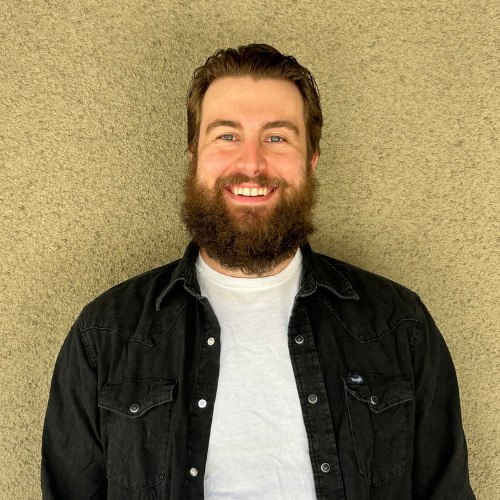
Buck Bloomingdale
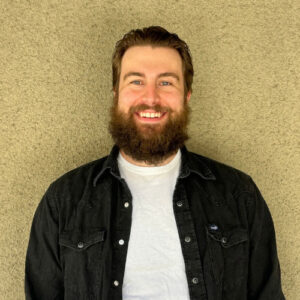
Buck Bloomingdale
writer Riding Hurt
Year Selected: 2025
Bio: Born and raised in a single stoplight town in rural Virginia, Buck Bloomingdale has always had a passion for entertaining others with imaginative storytelling. After earning a degree in media studies at James Madison University, Buck moved to Los Angeles, where he has written dozens of features, pilots, plays, and short stories, among other works. Several institutions have highlighted Buck’s work; he has received accolades in competitions such as Launch Pad Feature Competition, ScreenCraft Stage Play Contest, and Killer Shorts Horror Short Screenplay Competition; as well as publication in Tim Miller’s SNAFU: Last Stand. Most recently, Buck sold his feature spec Riding Hurt in a competitive auction to Teton Ridge with Range producing. Buck currently resides in Los Angeles, CA.
How did you get your break in screenwriting?
I started writing screenplays in high school, badly formatting them in Microsoft Word. But my real start was a “study abroad” opportunity in college that allowed me to intern at a production company in Hollywood. It was my first glimpse of how the sausage was made, and it gave me the confidence to come out and pursue screenwriting as a career, which led to eventually meeting my incredible team, and selling Riding Hurt.
What was a major turning point in your career?
When I first moved to LA I had horrible writers block for months, then one day I came home, and my fiancé had set up a special writing place with a cork-board and desk in the corner of our tiny apartment. After that I wrote three pages a day every day for seven years. There were many other turning points, but that was the moment I started thinking of myself as a real writer.
What are you working on now?
I’m too superstitious to answer this question…
What are some of the biggest lessons you’ve learned?
Writing advice is always tricky, but the one fool proof adage I’ve encountered is “read a lot, and write a lot.” I also frequently think of Mark Duplass’s “the cavalry isn’t coming” — no one is going to put words on the page for you.
What’s the hardest scene or project you’ve had to write? How did you navigate?
It’s always what I’m working on currently. And the only way to navigate it is to just keep writing.
What are some of your favorite films?
Taxi Driver, The Wild Bunch, Se7en, Miami Vice, Predator, The Thing, A History of Violence
Who are some of your favorite screenwriters?
Walter Hill, Michael Mann, Andrew Kevin Walker, John Milius, Jeremy Saulnier, Cormac McCarthy
Memorable experience from Austin Film Festival?
Getting to meet one of my heroes, Andrew Kevin Walker (see above), who was incredibly nice to a very nervous (and a little drunk) me.
How have you been spending your time since being apart of Austin Film Festival?
Writing specs and researching, researching, researching. Did you know powdered coffee creamer is extremely flammable?
How has being part of the AFF community helped spark your storytelling career?
Being from a super small rural community, I’ve always written alone in a room; even after moving to LA, I’ve never joined a writing group or anything like that. Being a part of AFF has been totally rejuvenating, there’s just something so special in getting to be around people who are just as passionate about story and creativity, and everyone is so positive in lifting each other up.
What are you looking forward to in 2026?
Tom Cruise in Digger.
Buck Bloomingdale
writer Riding Hurt
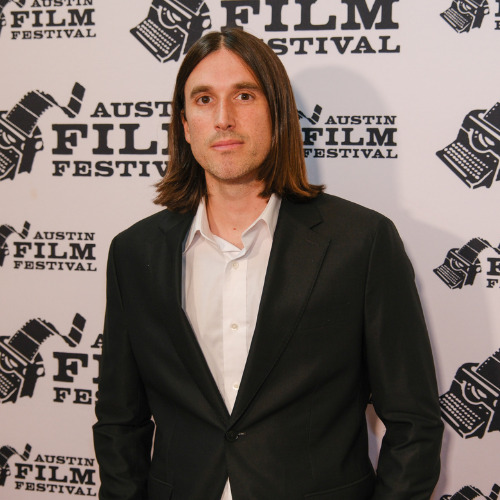
Richie James Follin
Richie James Follin
writer/director Crystal Cross, Eternal Sunshine of the Spotless Mind, The Science of Sleep
Project Selected: Crystal Cross
Year Selected: 2025
Twitter: @guardsmusic
Facebook: @Guardsmusic
Instagram: @richiejamesfollin
Bio: Richie Follin is an American musician, writer, actor, and filmmaker and a proud citizen of the Cherokee Nation. He first gained attention at 18 after releasing a 7-inch record on Posh Boy Records. Shortly after, Michel Gondry directed a music video for him and featured his music in Eternal Sunshine of the Spotless Mind, beginning a long creative collaboration.
Follin has toured internationally with bands including The Willowz, Cults, CRX, and Guards, performing at festivals such as Coachella, Lollapalooza, and Primavera Sound. He has appeared on television programs including Good Morning America, Jimmy Kimmel Live!, and The Late Late Show with James Corden.
In 2025, he wrote and directed his debut feature film Crystal Cross, which premiered at the Austin Film Festival and won the Audience Award.
How did you get your break in screenwriting?
I started screenwriting after a production designer friend named Sammy Lisenco invited me to a small screening in 2009 of a film he just worked on called Daddy Longlegs directed by the Safdie Brothers. It was the first time I had seen people my age just go out in to the streets with no budget and a small crew working with non actors and just shoot something they wrote. I started working on Crystal Cross the next day.
What was a major turning point in your career?
Recently, winning at the audience award at AFF and being added to the Popcorn List. Before that I would say the big turning point in my filmmaking career was deciding I couldn’t wait any longer to make my film. I was done waiting on anyone or anything and decided there was no turning back. Good or bad, with help or no help…I was going to finish my film.
What are you working on now?
I’m writing a new original screenplay, and adapting a book about Townes Van Zandt.
What are some of the biggest lessons you’ve learned?
Be open to people and ideas. Make new friends. Don’t wait on anyone or anything. Keep moving forward…up or down, just keep moving forward.
What’s the hardest scene or project you’ve had to write? How did you navigate?
Writing a feature was the hardest project I have had to write. I learned transcendental meditation at the David Lynch foundation and whenever I hit a road block in the story with a blank page staring back at me I would stop for 20 minutes and mediate. This actually worked for me. The ideas would flow through me at times I thought the tank was empty.
What are some of your favorite films?
I have a lot of favorite films, and I love specific parts of films sometimes more than the whole…I love the costume design of Coppola’s Dracula, I love Tak Fujimoto’s cinematography in the Silence of the Lambs, I love the Social Network score, I love Yoshiro Muraki’s production design on Ran, but some of the films I own and watch over and over again either with my kids or on my own are; Once upon a time in the West, Big Wednesday, Ikiru, 5 easy pieces, One-Eyed Jacks, Saving Private Ryan, Dazed and Confused, The Conversation, Manchester by the sea, The Godfather, Badlands, Stalker, Koyaanisqatsi, The third man, Public Enemy, White Heat, The Last picture show, Pirates of the Caribbean, Edward Scissorhands, Interstellar, The Foot fist way, Tropic Thunder, kiss kiss bang bang, American psycho, Toy Story trilogy, talladega nights, touch of evil, my own private Idaho, mad max, Jaws, The Thing, Apocalypto, Good will hunting, The town, Alien, Predator, Evil Dead, Drag me to hell, Fitzcarraldo, The Dollars Trilogy, Tombstone, Zoolander, Wedding Crashers, The Deer Hunter, The Apartment, The Great Escape, Pulp Fiction, Butch Cassidy and the Sundance Kid, Braveheart, Star Wars, boogie nights, there will be blood, the red shoes, the wizard of oz, on the waterfront, the hurt locker, urban cowboy, crybaby, hairspray, Indiana Jones trilogy, hook (sorry I don’t care what anyone says haha), no country for old men, The Big Lebowski, Unforgiven, Manila in the Claws of Light, The Searchers, A clockwork orange, Days of Being Wild, mean streets, the departed, Goodfellas, Vivre Sa Vie, mulholland drive, Lord of the rings trilogy, Harry Potter films, It’s a wonderful life, The Sandlot, Bottle rocket, Heat, The Last of the Mohicans, Thief, 8 1/2, Catch me if you can, Modern Romance,
Who are some of your favorite screenwriters?
Akira Kurosawa, John Milius, Michael Arndt, Bill Goldman, Christopher Nolan, Woody Allen, Charlie Kaufman, Coen Bros, Quentin Tarantino, George Miller.
Memorable experience from Austin Film Festival?
Well apart from meeting some of my film heroes like Rian Johnson, Celine Song, Robert Rodriguez, Christopher Mcquarrie, and Christine Vachon…AND attending a life changing screen writing lecture by Michael Arndt…I would say going to get bbq at Robert Rodriguez’s Troublemaker Studios was quite memorable, but really meeting all the people who put on the fest and who were also just there attending was a very special experience I won’t soon forget.
How have you been spending your time since being apart of Austin Film Festival?
I am currently doing film festivals with my debut feature Crystal Cross.
How has being part of the AFF community helped spark your storytelling career?
People in the film industry recognize Austin film fest is one of the top film festivals in the world. Premiering my film there was the best career decision I have made.
What are you looking forward to in 2026?
Traveling around the festival circuit with my film Crystal Cross, and performing some of the music from the film with my band Guards!
Any news you’d like to share?
crystalcrossfilm.com
Richie James Follin
writer/director Crystal Cross, soundtrack Eternal Sunshine of the Spotless Mind, The Science of Sleep
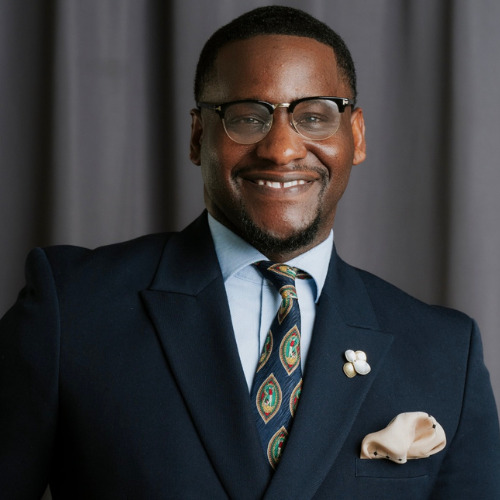
David Fortune
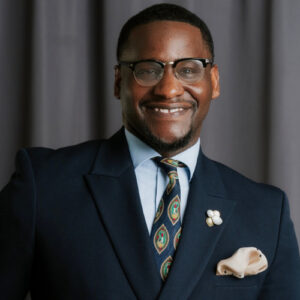
David Fortune
writer/director Color Book, Shoebox, producer Laced
Project Selected: Color Book
Year Selected: 2024
Instagram: @bydave_fortune
Bio: David Fortune is an Atlanta-based writer and director whose debut feature, COLOR BOOK, premiered at the 2024 Tribeca Festival and went on to win jury and audience awards at Austin Film Festival, Deauville, Denver, Chicago’s Black Harvest Film Festival, and numerous others. The film earned him Variety’s “10 Directors to Watch” distinction and a 2025 NAACP Image Award nomination for Outstanding Breakthrough Creative. Fortune’s earlier works include US (Netflix Content Creator Program) and SHOEBOX (Indeed–Hillman Grad’s Rising Voices, acquired by Amazon Studios). A graduate of Morehouse College and Loyola Marymount University, he has held directing fellowships with Netflix, Paramount, Film Independent and Village Roadshow, among others. As a writer and director, David seeks to capture universal connections within marginalized communities while shedding light on intimate human experiences.
How did you get your break in screenwriting?
I got my break as a screenwriter by simply writing my own films to direct. There were stories I wanted to tell that could only come from my own voice, and if I wanted to direct them, I needed to be brave enough to write them.
What was a major turning point in your career?
My major turning point in my career was winning the AT&T Untold Stories Award, which provided me a million dollars to direct my first feature film, Color Book. Writing and directing that film changed my life and allowed me to experience the impact of filmmaking and its importance on people’s lives.
What are some of the biggest lessons you’ve learned?
Done is better than perfect. My screenwriting professor (Prof. Avery O. Williams) gave me that advice as a film student. I didn’t always like hearing it, especially as someone who can lean toward perfectionism, but I’ve come to really understand its value. Finishing the work allows you to improve in your craft and move on to tell greater stories. You can’t experience the next unless you complete what’s now.
What’s the hardest scene or project you’ve had to write? How did you navigate?
Honestly, every project feels like the hardest when you’re in it. As a writer, how I approach my challenges in completing a screenplay is recognizing that this story is bigger than you, your stress, your anxiety, and your doubts. There’s someone who is waiting for you to complete this. It is supposed to be stressful and hard, because it’s worth it.
What are some of your favorite films?
City of God, La Haine, Where’s The Friend’s House, Killer of Sheep
Memorable experience from Austin Film Festival?
Showing Color Book and winning Best Narrative Feature all in the same day. I’m still walking on cloud nine from that experience.
How have you been spending your time since being apart of Austin Film Festival?
I’ve been traveling across the U.S. on my festival circuit for Color Book and writing the next story. But most importantly, I’ve started teaching film at Savannah College of Art and Design (SCAD). It’s been a beautiful experience connecting with students and uplifting the next generation of filmmakers from Atlanta.
How has being part of the AFF community helped spark your storytelling career?
It reminded me of the importance of being a writer. Without us, there’s no industry, no jobs, no impact, no opportunities for other crew and production team members to execute their craft. It starts from the seed of a writer that eventually blooms. Being a part of the Austin Film Festival Community has reminded me of the purpose of who we are as screenwriters and storytellers.
What are you looking forward to in 2026?
I look forward to developing the next feature film. I’m excited to evolve in my craft and experience my voice again through cinema.
David Fortune
writer/director Color Book, Shoebox
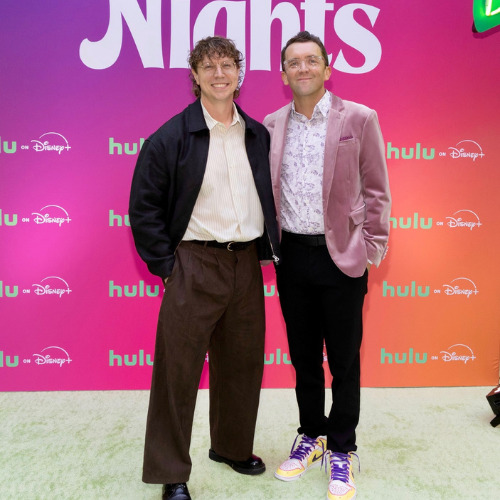
Ty Freer & Nick Keetch
Ty Freer & Nick Keetch
writers Sunny Nights, Almost Paradise
Project Selected: Sunny Nights
Year Selected: 2026
Instagram @tyfreerbaby, @utahgetmetwo
Bio: Ty Freer and Nick Keetch are a writing team from different sides of the drama-comedy divide. Nick has a black heart filled with doom and his writing tends towards the kind of thematically grandiose ideas that make Ty sick. Ty, meanwhile, has the broken brain of an absurdist, and focuses on the minute, comedic details of characters which drives Nick insane. Despite their differences, they’ve managed to combine their talents to create fun, ambitious, character-driven stories that are both hilarious and emotionally resonant. Their show, Sunny Nights, starring Will Forte and D’Arcy Carden is available to watch now on Hulu.
How did you get your break in screenwriting?
Ty won Best Comedy Pilot at the Final Draft Big Break Awards and was signed by a management group that was judging the competition. Nick was invited to the Sundance Episodic Lab and signed with his manager soon after. Eventually, we started working together and an original pilot got us staffed on a show called Almost Paradise.
What was a major turning point in your career?
Stan (an Australian streaming network) greenlighting our pilot bumped us from staff writers to showrunners overnight.
What are you working on now?
While we wait on a potential second season pick-up for Sunny Nights, we’ve got a comedy in development at a major studio and are working on several pitches.
What are some of the biggest lessons you’ve learned?
Don’t be precious. You’re gonna rewrite it anyway. We’re still trying to heed that advice.
What’s the hardest scene or project you’ve had to write? How did you navigate?
Running the writers room for Sunny Nights was incredibly challenging. We were stepping up from being staff writers and had very little experience of how to manage or guide a group of writers. We navigated it by creating the kind of room which was open to any and all ideas while doing our best to hide our almost constant sense of panic.
What are some of your favorite films?
Ty – Four Lions, Portrait of a Lady on Fire, Toy Story 2, EEAAO, Barbarian, Hustle & Flow, Smile 2 Nick – Point Break, No Country for Old Men, Blue Ruin, Inside Llewyn Davis
Who are some of your favorite screenwriters?
Eric Roth, Simon Rich, Scott Frank, Lord/Miller, PTA, Charlie Kaufman, Zach Cregger, The Coens
Memorable experience from Austin Film Festival?
We met at the Austin Film Festival in 2012. Fourteen years later, we’re writing partners with our own show on Hulu. Doesn’t get much more memorable.
How have you been spending your time since being apart of Austin Film Festival?
Fourteen years is a lot to summarize. Aging?
How has being part of the AFF community helped spark your storytelling career?
We met at AFF. Our journey would look a lot different – read: less successful – if that hadn’t happened.
What are you looking forward to in 2026?
Sunny Nights (hopefully) being renewed for season 2. Maybe that will jinx it? Okay. Sunny Nights not being renewed for season 2. There we go.
Ty Freer & Nick Keetch
writers Sunny Nights, Almost Paradise
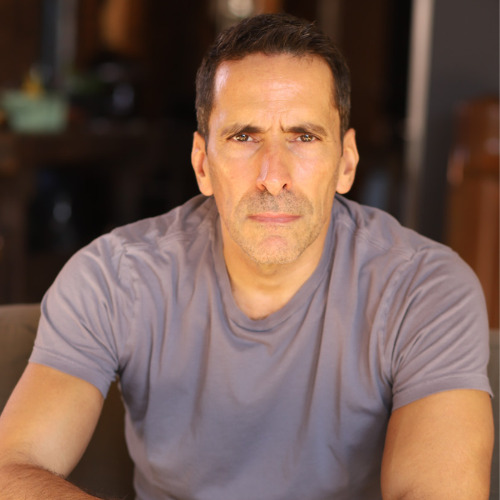
Yuval Hadadi
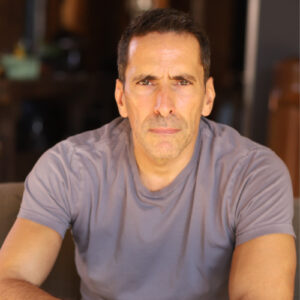
Yuval Hadadi
A Man Walks Down the Street (2025) writer/director. 15 Years (2019) writer director. Soil (Short, 2005) director.
Project Selected: A Man Walks Down the Street
Year Selected: 2025
Instagram: @yudheyfilms
Bio: After a decade as a theatre director in New York City, in 2017 Yuval wrote and directed his first feature film 15 Years, which was chosen to open the 2019 Tel Aviv International LGBT Film Festival, and won Best Picture awards at the Chicago LGBT Film Festival and the Naples International Film Festival, among others. The film was released in 2020 and was distributed worldwide through Breaking Glass Pictures. It is available for streaming on Apple TV and Amazon Prime.
In 2020, Yuval started writing his second feature, A Man Walks Down the Street, which was produced in 2024. The film won the Best Narrative Feature award at the 2025 Austin Film Festival, and it continues its journey among film festivals. Yuval lives and works in New York City.
How did you get your break in screenwriting?
I always loved literature – reading, storytelling, poetry, etc. I was a theater director for years before writing my first script. I often worked with original material, developing and editing new plays for our theatre company in NYC, and I realized ’m drawn to the creative writing process. My first screenplay 15 Years started as a challenge. I watched and loved the movie Weekend by Andrew Haigh, a story about two men having an affair over a single weekend. Discussing it with a friend, I said to him – I wonder what would happen 15 years into their relationship. His response was – write it! And that’s how it began. A simple, straightforward push.
What was a major turning point in your career?
The fact that 15 Years was picked up by a production company, giving me the opportunity to direct my first feature film, and then experiencing its success, all resulted in a major change in my professional life. I realized I love writing, exploring human behavior, sometimes in extreme conditions, where the characters’ realities are being tested and they need to overcome life changing challenges. Writing became not only gratifying, but also therapeutic.
What are you working on now?
I am developing a new script – Unseen. A story that explores the longing that comes with loneliness, the joy in finding a soulmate, and the challenges of living authentically.
What are some of the biggest lessons you’ve learned?
There are no short cuts in the creative process. By nature, I am not a very patient person. When I wrote 15 Years, I was convinced I’ll have a ready to shoot script within a year. I remember doing a table read of the 16th draft with some actors and friends. When we were done, a film editor friend who attended said to me, “I’ll see you at draft 30”, and I was sort of shocked by the comment, and dismissed it. I was so naïve to think that one or two more edits to the script would be enough. Of course she was right, and it took almost a year before the script was ready. Btw, she ended up editing the film. So, when I approached my second script, A Man Walks Down the Street, every time I thought that I can rush through writing it, I remembered what she said, and realized I need to allow the process to happen in its own time without trying to push it.
What’s the hardest scene or project you’ve had to write? How did you navigate?
I think the hardest scenes for me to write are the ones where the characters’ motivations clash, it’s the scene that is going to change the course of the story, the pivotal moment where everything shifts. The challenge is that although I know what needs to be said, what triggers need to be activated, and where the emotional peaks and valleys should be, thinking about it all at once is daunting and overwhelming. My solution is to slow brew the scene in my subconscious, constantly think about it, give the characters space, let them occupy my thoughts, allow them to develop a voice, and let them take the scene where they want to, even if it’s not where I originally planned it to go. And whenever there’s a spark, an idea, a word, a sentence, a gesture, I write it down without order, almost like placing puzzle pieces on a board. Once I understand how the scene should start and end, I begin writing it and let it spill onto the page. When I get stuck, I leave it alone and come back when I’m ready for another purge session.
What are some of your favorite films?
I love different genres, but I gravitate towards dramas and films that are character or relationship driven. I also love classic films where there is back and forth banter of smart, clipped dialogue. The list of favorite films is long, but this is what comes to mind now: The Go-Between by Joseph Losey, Who’s Afraid of Virginia Wolf by Mike Nichols, Birdman of Alcatraz by John Frankenheimer, A Woman Under the Influence by John Cassavetes, The Blonde One by Marco Berger, Locke by Steven Knight, God’s Own Country by Francis Lee.
Who are some of your favorite screenwriters?
Like a mentioned, I love a great, smart dialogue. Joseph L Mankiewicz wrote and directed All About Eve (among others) where the dialogue is incredible – rich, quick, smart and relentless. I love David Mamet’s rhythm and use of repetition. His script adaptation of his play, Glengarry Glen Ross is a favorite of mine. Edward Albee is a favorite both in theatre and film. Debora Cahn’s writing is also very inspiring.
Memorable experience from Austin Film Festival?
I’d say the entire experience with our film A Man Walks Down the Street, the fact that it premiered at AFF, and the incredible way it was received, was very memorable. Also, I was invited to do a one-minute pitch of the film in front of a room full of people, just before one of the panels that AFF organized during the festival and conference, and I was very nervous. I didn’t practice and wasn’t sure I’d be able to coherently tell the story of the film in a minute. Those 60 seconds which seemed endless while I was on stage, felt like a blink of an eye once I was done. That was memorable. Plus, I didn’t embarrass myself and I think it went pretty well…
How have you been spending your time since being apart of Austin Film Festival?
We continue promoting A Man Walks Down the Street, and I spend most of my time developing and writing the script for Unseen.
How has being part of the AFF community helped spark your storytelling career?
Being surrounded by very talented people who are like-minded and share a similar interest and passion for writing and storytelling is very inspiring, motivating and invigorating. Being part of the AFF community instilled confidence in me, gave me a boost of trust, and a drive to keep improving — and proving that I am worthy of being part of this community.
What are you looking forward to in 2026?
I hope A Man Walks Down the Street finds distribution, and I am looking forward to finishing a decent draft of my new screenplay Unseen.
Any news you’d like to share?
A Man Walks Down the Street was accepted to a few more prestigious festivals which is very exciting for us. https://www.imdb.com/name/nm3062328/?ref_=fn_t_1
Yuval Hadadi
writer/director A Man Walks Down the Street, 15 Years, director Soil
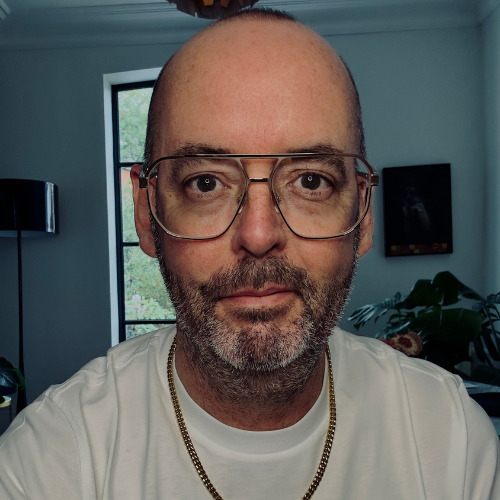
Christopher Holt
Christopher Holt
writer 27 Cows, Crocodile, and Hillside
Project Selected: 27 Cows
Year Selected: 2025
Instagram: @cmholty
Bio: Christopher Holt is a UK-based screenwriter, director and producer working across film and television, with a focus on character-driven stories that explore resilience, moral conflict, and the lives of ordinary people under pressure.
He is a recipient of the Austin Film Festival Wonder Project Fellowship, recognition that led to commissions for two feature films based on true stories. His work is defined by a grounded, human approach to storytelling — blending humor, emotional truth, and strong narrative drive.
As a filmmaker, Christopher has developed and produced projects across both scripted and documentary, collaborating with production companies and global streamers on stories that balance cinematic ambition with real-world authenticity. His work often draws on lived experience and extensive research, particularly in the areas of social justice, true crime, and working-class life. His recent feature documentary, The Devil on Trial, was a global hit for Netflix, ranking as the platform’s number five film worldwide in 2024.
He is the founder of Fat Lip Films, through which he continues to develop original film and television projects. His current slate includes Hillside, an eight-part drama exploring the women who fell victim to the Hillside Strangler and the mistakes made by police as they tried to catch them, and Jackpot, a comedy-drama feature about a group of working-class mothers who rob a local bingo hall.
Christopher is drawn to stories in which individuals are forced to confront who they are versus who they’ve become — and where change comes at a cost.
How did you get your break in screenwriting?
After years working in documentary and drama-documentary, I wanted to move into scripted storytelling. I wrote and directed a short film, Three Sleeps, which performed strongly on the festival circuit, winning several major awards and being BAFTA shortlisted. That experience gave me the confidence to make the shift. I went on to write a pilot called Crocodile, a four-part series that was optioned by Eleventh Hour Films and led to script commissions from the BBC and UKTV. While the project didn’t ultimately make it to screen, it was a real turning point — it clarified the kind of writer I wanted to be and set me firmly on the path into scripted work.
What was a major turning point in your career?
Having my first scripted drama, Crocodile, optioned by UKTV/BBC marked a major step forward, leading to multiple pilot options and continued development opportunities. Winning the Austin Film Festival Wonder Fellowship has taken that momentum to another level.
What are you working on now?
The Wonder Fellowship is a year-long commitment to write two feature films based on true stories. While I can’t share specifics yet, both stories are phenomenal — rich, surprising, and deeply human. It’s been an incredible opportunity to immerse myself in real lives and events, and to develop projects that feel both commercially compelling and emotionally grounded, while working alongside a brilliant team of collaborators.
What are some of the biggest lessons you’ve learned?
The biggest lesson I’ve learned is that success rarely comes from the projects that make it to screen, but from the ones that don’t — the near-misses that sharpen your voice, build relationships, and quietly move you closer to the work you’re meant to make. But you do have to grow a thick skin. Rejection is constant, but so is progress, if you’re willing to keep going.
What’s the hardest scene or project you’ve had to write? How did you navigate?
27 Cows was my first feature film, and up to that point I’d never written anything longer than 60 pages. Like most first-time feature writers, I found myself getting lost in act 2 — that long stretch where the story can easily drift. To solve it, I treated the script as a series and wrote two hour-long episodes, then combined them into a single feature. Structurally, it didn’t quite work — it was uneven and not the right shape — but it gave me a much stronger foundation to build from. It helped me understand the story, the character arcs, and the spine of the piece in a way I hadn’t before. It’s not a method I use now, but at the time it was invaluable — a practical way of finding my way through something I’d never attempted before.
What are some of your favorite films?
Chinatown, Hobsons Choice, Some Like it Hot, One Flew Over the Cuckoo’s Nest
Who are some of your favorite screenwriters?
I’m drawn to writers who find drama in ordinary lives and build stories around character rather than spectacle. Michael Arndt and Alexander Payne are big influences in that respect — their work is simple, human, and emotionally precise, with humour that never undercuts the truth. I’m also influenced by writers like Tony Gilroy and Susannah Grant, who explore moral conflict within real-world systems. Michael Clayton and Erin Brockovich are great examples of character-driven stories set against larger institutions — which is very much the space I’m interested in.
Memorable experience from Austin Film Festival?
The greatest moment was seeing Michael Arndt give his lecture on Act 1s. It was totally inspirational and his teaching features heavily in my new scripts.
How have you been spending your time since being apart of Austin Film Festival?
Writing, writing, writing. I write every day.
How has being part of the AFF community helped spark your storytelling career?
Being part of the Austin Film Festival community has been a real turning point for me. It’s not just the recognition — it’s being surrounded by people who genuinely care about storytelling and take the work seriously. That kind of environment pushes you to raise your game. The Wonder Fellowship especially has been huge. It’s given me the chance to develop two feature films based on true stories, working closely with people who challenge and support you in equal measure. More than anything, it’s made the whole process feel less isolating — like you’re part of something, and you’re moving forward, even when nothing’s on screen yet.
What are you looking forward to in 2026?
I’m continuing to focus on writing features. I’m currently on the second draft of my first film for the Wonder Fellowship, which I’m really enjoying — it’s been great getting deeper into the story and the characters. Alongside that, there’s another project I’ve wanted to write for a long time, so I’m looking forward to finally giving that some attention as well.
Any news you’d like to share?
This year is shaping up to be an exciting one. My debut feature 27 Cows is now set up with a producer, with financing underway and me attached to direct. I also have two documentaries coming out — one on the 1956 Suez Crisis, and another exploring the experiences of survivors of the 9/11 attacks. Alongside that, I’m developing a new horror feature with producers, which I plan to write later in the year.
Christopher Holt
writer 27 Cows, Crocodile, Hillside
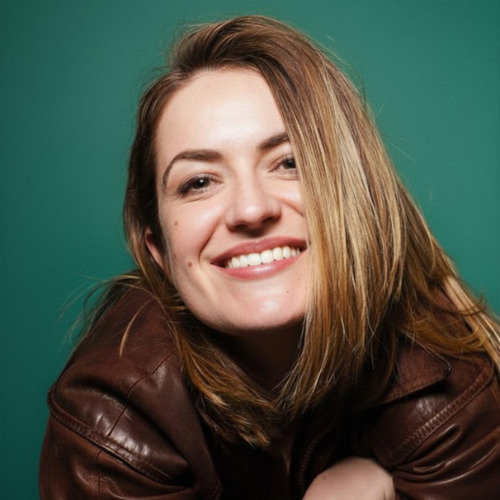
Olivia Jampol

Olivia Jampol
writer/director, HOMESTALKER
Project Selected: HOMESTALKER
Year Selected: 2025
Twitter: @oliviajampol
Facebook: facebook.com/ojampol
Instagram: @oliviajampol
Bio: Olivia Jampol is a bilingual writer/director/actor who grew up on a coffee farm in Costa Rica and studied filmmaking at Harvard. A third-culture kid with an outsider’s obsession with Americana, she writes provocative, female-driven stories that blend psychological thriller, surrealism and body horror, plumbing the depths of female obsession, identity and desire to find the funny, strange sublime. Her debut feature HOMESTALKER, about a woman who falls romantically in love with a Brooklyn apartment, was shortlisted for the Sundance and Black List Labs and received a Special Mention at the Gotham Week Honors. It has been optioned by Post Film with Olivia set to direct. She is repped by Marc Manus at Persistent Entertainment.
How did you get your break in screenwriting?
After college, I took a circuitous route back to screenwriting: documentary production, celebrity assistant, theater actor. And then the pandemic hit. And the writing came pouring out of me again. I was going slowly crazy alone in my apartment with my cat, (naturally writing horror scripts about women going crazy alone in their apartments with their cats), while also losing my mind apartment hunting in NYC, which is its own special kind of psychological horror. I became obsessed with an apartment I lost, and found myself walking by it every day, staring into the windows from across the street, seething about whoever got the life I was supposed to have. I made myself sit down and exorcise it (as Louis Bourgeois said “In my art, I am the murderer”). I borrowed from the rom-com beat sheet I’d been failing to use for my job writing Hallmark scripts: Girl Meets Boy, etc. Only this time it was: Girl Meets House, etc. It weirdly worked. This hyper personal, left-of-center, zeitgesity script opened every door for me. Turns out all I needed to start my career was a global pandemic and an apartment I couldn’t have (and a very hungry interior life).
What was a major turning point in your career?
Getting an 8 on the Black List for HOMESTALKER was the first time I thought: “Okay, maybe I am not a total fraud.” This hyper personal script was hitting some kind of millennial nerve—despite how strange it is, the concept is pretty universally relatable (or as my EP says: “It has that ‘Strange Attractor’ quality”). It started earning accolades and placing at labs and fests such as Sundance, BlueCat, ScreenCraft, Black List Labs, making it to the top 1% of all thrillers on Coverfly, but the real turning point was when I became a semifinalist at AFF. I can draw a direct line from that festival to when everything started snowballing: the collaborators, the creatives, the execs, the option, Gotham, and the jobs I’ve booked since. It all traces back to that one, weird, personal script and years of hustling/not giving up on it.
What are you working on now?
I’m still deep in HOMESTALKER as writer/director, building a creative team, and casting, all of which is thrilling and what keeps my brain on the anxiety carousel at 3am. I’ve also been developing a sapphic vampire feature with an all-female team (a dream) with Lili Reinhardt’s Small Victory Productions, writing a reproductive body horror feature, and developing a historical fiction film about the extraordinary and unknown sculptor Elisabet Ney (also with Mike Blizzard). Most recently, I booked an OWA to adapt a female driven graphic novel into an art world thriller feature (my first studio pitch), which I’ll be starting once the ink dries.
What are some of the biggest lessons you’ve learned?
Ninety-seven percent of breaking through is perseverance, and the other three percent is someone you met at a bar or in line at a festival event. So go to the thing: the festival, the party, the screening because you never know who you’re going to meet. And lead with infectious passion whenever you talk about your work! People will leave a conversation wanting to hop on board whatever you’re building. But make sure the material is ready when that door finally opens, because it will. For me, the harder fear was never rejection (no one understands rejection more intimately than actors), it’s the fear of writing badly. But every writer writes garbage. Successful writers just write the garbage and keep moving. Make the world of your script as specific as possible. HOMESTALKER broke through because its world is clear, specific and real. And most importantly, be someone people genuinely want to be around. Kindness and grace go further than almost anything else. Oh, and go look at art, read books, see theater! Other mediums/disciplines will inspire you in ways you’d never expect.
What’s the hardest scene or project you’ve had to write? How did you navigate?
In HOMESTALKER, my protagonist is physically intimate with the house she loves, so I had to write a sex scene between a woman and a piece of architecture. Which is tricky! I wanted it to be genuinely sexy and emotionally real, while still being surprising, but without tipping into farce or camp. The key was treating it with the same reverence I’d give any intimate human encounter. When a trusted reader told me the house sex scenes both moved and excited him, I knew I’d nailed it. The lesson is to treat every character with empathy, whether villain or hero, human or Victorian brownstone because judgment is the death of character.
What are some of your favorite films?
Growing up in Costa Rica, surrounded by vertiginous color and telenovela high camp and drama, I was basically born to love Almodóvar: first All About My Mother, then the transgressive, queerer, stuff like Luci, Pepi, Bom (chef’s kiss). As a young filmmaker, I was inspired by female auteurs making subversive work, often centering complex female interiority, like Fat Girl, Jeanne Dielman, The Virgin Suicides, Vagabond, La Ciénaga. I love films that explore the darkness of the human condition/surreal, genre-defying films like The Seventh Continent, The Piano Teacher, Blue Velvet, Eraserhead, Safe, Phantom Thread, Dogtooth, Punch Drunk Love, Force Majeur, Persona, Fargo. I’m also excited by the work of queer, boundary-pushing filmmakers like Jane Schoenbrun, and female filmmakers who make the grotesque sublime, like Julia Ducurneau; I really think women do body horror better than men because we understand how bodies can be simultaneously sites of disgust and desire. And I’m definitely a sucker for mouthwatering visuals like in In The Mood for Love, Paris, Texas, A Different Man, Badlands, Werckmeister Harmonies, The Conformist, Swallow. And I think Clueless and Best in Show are both perfect films that I rewatch at least once a month.
Who are some of your favorite screenwriters?
Charlie Kaufman, the Coen Brothers, PTA, Paul Schrader, Haneke, Phoebe Waller-Bridge, Céline Sciamma, the Wachowskis, Gillian Flynn, Justine Triet, basically writers who build a tonal world so specific you couldn’t imagine it belonging to anyone else’s brain. And where humor is always present, balanced with the weird and the dark, because that’s life, baby. I’m also always reading, thinking, or talking about books books books, so fiction writers (especially Latin American) are a continual source of inspiration for my screenwriting (I won’t even begin to name authors I love, but please check out the Argentinians).
Memorable experience from Austin Film Festival?
Meeting my now-Executive Producer Mike Blizzard, a producer on the Linklater films Hit Man and Blue Moon, at the AFF screenwriters’ BBQ. He’s the chillest, kindest dude, and in my estimation, the unofficial Mayor of Austin. With the warmth of an old friend, he took me under his wing for the whole festival, introduced me to the best people and food in Austin, and we’ve been collaborators and dear friends ever since. Mike is proof that you can make important life/career moves while holding a plate of (honestly, unbeatable) brisket.
How have you been spending your time since being apart of Austin Film Festival?
I’ve been focused on pushing HOMESTALKER toward production like someone on a permanent coffee IV drip and way too many feelings about their debut film. But that obsession has also helped me assemble the creative team of my dreams, cinematographers and production designers from some of my favorite films of the last few years. And I’ve been prepping as much as humanly possible so that I can comfortably pivot on set when things undoubtedly don’t go according to my meticulous plan. In the meantime, I’ve also been writing for a podcast about the First Amendment (not relevant at all), pitching on exciting open assignments (booking a few!), developing work with creative collaborators, and working on a new original script. My slate and creative community are expanding and my plants are (mostly) thriving, so good news all around.
How has being part of the AFF community helped spark your storytelling career?
Honestly, AFF is where my career took off, full stop. I’d been building momentum over 2024 with great festival/lab placements and was slowly getting on people’s radars, but I can trace the beginning of HOMESTALKER moving from a script to a film in development directly back to that week: I met my Executive Producer, who introduced me to my incredibly cool composer Graham Reynolds (Hit Man, A Scanner Darkly), signed with my awesome producers at Post Film (who took a chance on a new director—rare in this risk averse industry), and we’ve been moving closer and closer toward production ever since. AFF changed my life professionally and personally, and the people I met there have become some of my closest ride-or-dies. I owe it a lot, including this profile! What’s up, Austin?
What are you looking forward to in 2026?
Making my first feature (fingers extremely crossed)! I’m also excited to work on my first studio writing gig, finish my pilot, land a great agent, keep developing cool new projects with creatives I love, and add enough plants to my Brooklyn apartment (current count: 80 /sq. footage: 700) that it legally qualifies as a greenhouse. I’d also like to pick up a skill I can do with my hands like carpentry (!?), or something super cottage-core like sewing. Or just try cooking off recipe without panicking.
Any news you’d like to share?
Welp! 2025 was a big year for me: HOMESTALKER was optioned by the NY-based company Post Film with me attached to direct, and we’ve been going out to some of my favorite actors for the lead. The project was selected for the Gotham Project Market, where it received a Special Mention at the Gotham Week Honors. That got us into some incredible rooms and meetings with many of my dream companies like NEON, Sony Pictures Classics, 20th Century. Most recently, I pitched and booked my first big studio job, so when the ink dries I’ll be writing an exciting female-driven art thriller set in New York (can’t share much more just yet). I try to post updates on my website: www.oliviajampol.com, and you can follow HOMESTALKER news at www.homestalkerfilm.com. Here’s the The Hollywood Reporter article about our Gotham mention: bit.ly/4rRnXJH
Olivia Jampol
writer/director, Homestalker
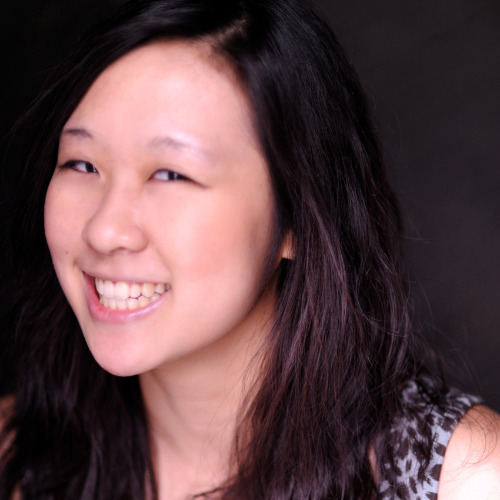
Melissa Kong
Melissa Kong
writer Wonderful World, Don’t Worry About It
Project Selected: n/a
Year Selected: 2026
Instagram: @melissajkong
Bio: Melissa is a comedy writer/director from Chicago. She was a 2025 fellow in the Fox Entertainment Writers Incubator. Currently, she’s a writers’ PA on a Hulu show. Directing highlights include Don’t Worry About It (Slamdance Film Festival), Hey Kiddo (Austin Asian American Film Festival). Writing highlights include Chicago P.A. (Fox Entertainment Writers Incubator), Wonderful World (CAPE List, WIF x Black List finalist, Nicholl quarter-finalist), Don’t Worry About It (Disability List, Nicholl Fellowship top 15%).
How did you get your break in screenwriting?
I started as an actor and wanted to write comedic roles for myself, but quickly fell in love with writing.
What was a major turning point in your career?
During AFF, a DEI executive had reached out to me which later led to me getting my first staffing meeting. I didn’t get the job, but it was a major turning point because it gave me the confidence that I was on the right track.
What are you working on now?
Getting financing for my proof of concept.
What are some of the biggest lessons you’ve learned?
You can’t fit a square peg in a round hole. If a story is telling you it needs to go a different direction, then listen to that.
What’s the hardest scene or project you’ve had to write? How did you navigate?
I think every project you’re writing is the hardest at that time, so you have to remember why you’re writing it in the first place.
What are some of your favorite films?
Bridesmaids, Normal People, Short Term 12, Ferris Bueller’s Day Off, Mean Girls
Who are some of your favorite screenwriters?
Mike Schur, Destin Daniel Cretton, Greta Gerwig
Memorable experience from Austin Film Festival?
The first feature film I ever wrote placed in the semi-finals of AFF.
How have you been spending your time since being apart of Austin Film Festival?
I’ve been support staff in a few writers’ rooms.
How has being part of the AFF community helped spark your storytelling career?
I met so many folks during my time at AFF, who are writing on TV shows or getting their films produced that it keeps me motivated. I’ve also met writers, who were once attendees and now are panelists at AFF. It reminds me how much your career can change.
What are you looking forward to in 2026?
Directing my proof of concept. Staffing and writing my first episode of television.
Melissa Kong
writer Wonderful World, Don’t Worry About It
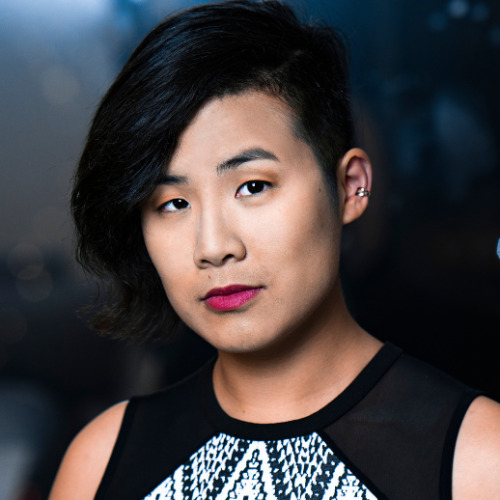
Faith Liu
Faith Liu
writer Hoppers; writer/director Sundowning
Project Selected: Airlock
Year Selected: 2018
Instagram: @faitheliu
Bio: Despite being homeschooled, Faith had a normal childhood… if reenacting Greek myths instead of playing house is “normal,” and months researching Chinatown’s gang wars is a “childhood.” In using story to seek community outside given systems, Faith has encountered diverse people and cultures that inspire her work – she created a short documentary around the shared immigration experiences of Sudanese refugees and Polish expats; directed a Cold-War setting of Mozart’s Magic Flute; wrote a sci-fi novel; and published in two academic journals before ultimately finding her people in the film world. She is an alum of USC, the CAPE New Writers Fellowship, and Christina Hodson and Margot Robbie’s Lucky Exports Pitch Program; has written for Blumhouse, FilmNation, Sony Pictures Animation, and Disney/Pixar; and enjoys stories about loners finding community in unlikely places.
How did you get your break in screenwriting?
I was working as a writers’ PA on Better Call Saul at the time, getting to work at 6am so I could spend the first two hours of my day doing my own writing in the Starbucks across the street and applying to every fellowship and writers’ program on the planet. The scripts I was working on in that Starbucks turned out to be what got me into the CAPE New Writers Program, and from there into my first shopping agreement, first assignment, and so on and so forth. So I have Luther – the manager at that Starbucks, who would always save my table for me on busy mornings, to thank for that!
What was a major turning point in your career?
Realizing I had it in me to write horror. I was in the Lucky Exports pitch program at the time, which was for women who wrote in the action space, and we had been instructed to bring a few ideas in to pitch. I had thrown one horror concept in there, not expecting anyone to select that one, and of course that’s the one the rest of the gals liked. I started working on it, feeling very cringey about the entire thing, but I remember getting up to pitch the story, going through “kill” scenes with a “ugh I don’t know if this works” face… and then realizing everyone was staring at me aghast. I hadn’t known the stuff I was pitching was at all scary or gross, but apparently it was, and that became the pitch we sold to Blumhouse and hooked me on horror for the rest of my life.
What are you working on now?
Turning my short film Sundowning into a feature.
What are some of the biggest lessons you’ve learned?
If you can’t create, you can work – never wait for inspiration to come to you. Show up consistently and the inspiration will eventually get the idea and start showing up, too.
What’s the hardest scene or project you’ve had to write? How did you navigate?
Sundowning – it’s a story about elderly folks in a nursing home, and I was caring for my grandmother at the time. The story started off as one thing and quickly became another, as I realized all the things I was trying to tell my grandmother were actually things I myself needed to hear. Navigating those emotions and relationships while living inside them can be a lot!
What are some of your favorite films?
Lars and the Real Girl, Rango, The Big Short, When Harry Met Sally, Train to Busan, Harvey (I could go on)
Who are some of your favorite screenwriters?
Billy Wilder, Bong Joon Ho, Tony Gilroy, Terence Winter
Memorable experience from Austin Film Festival?
Bumping into one of the Pixar writers – it was my first time at any film festival and I was so excited, overwhelmed, and sleep-deprived, and then I recognized Jason – not from his work at Pixar, ironically, but from a viral YouTube comedy skit I had been a fan of back in high school. I ran up to him, acting more starstruck than I’d ever been any time since or previous, babbled something completely embarrassing about him being “the guy in the video,” and then left. Years later, I found myself at Pixar, on a Zoom call with him and the other Pixar writers, and prayed to high heaven he didn’t remember me from that one incident (he didn’t, thankfully).
How have you been spending your time since being apart of Austin Film Festival?
Writing! And directing (that one’s new).
How has being part of the AFF community helped spark your storytelling career?
AFF was my first ever “work conference,” and introduced me not only to a ton of great speakers and wisdom, but also to new friends and collaborators that have helped me on my journey. I’ve traded script notes, gotten crew recommendations, and found new ideas thanks to these folks, and I couldn’t be more grateful!
What are you looking forward to in 2026?
Getting back on set!
Faith Liu
writer Hoppers; writer/director Sundowning
Sophie Miller
Sophie Miller
writer/director Ranch Water, writer Ms. Marvel
Project Selected Ranch Water
Year Selected: 2021
Instagram: @sophiee_millerr
Bio: Sophie Miller is a writer-director from Pennsylvania with a playlist for everything she’s ever created. She got her start in New York working in late night before moving to Los Angeles to be an assistant for Marvel Studios’ Loki and later went on to write for Ms. Marvel on Disney+. Sophie’s directorial debut, Ranch Water, premiered at Austin Film Festival in 2021. Since then, she has worked on a drama series for Amazon Studios as well as developing more feature films and series of her own.
How did you get your break in screenwriting?
I really got my start in screenwriting at the University of Texas at Austin, where I met incredible people who would go on to become my friends, crew members, actors, and confidants. That community allowed me to write and direct in a space that was never judgy, just eager to see me grow. Then one summer, I was a lucky intern in the screenwriting department at Austin Film Festival. Seeing the process up close made it all feel real and possible. So when we made Ranch Water, we planned everything around one goal, to premiere at AFF. It felt like coming full circle—starting there as a student and intern, and then returning with a film of my own.
What was a major turning point in your career?
When Ranch Water premiered at AFF it really gave a small movie like ours the chance to actually be seen by real audiences, even if the people in that audience just had time to kill before going next door to watch Wes Anderson’s new movie. You really can’t buy that kind of exposure. It validated all the scrappy work we put into making the film.
What are you working on now?
I’m currently working on my next feature, hoping to go into production next year!
What are some of the biggest lessons you’ve learned?
One of the biggest lessons I’ve learned is that if you’re waiting for someone else to tell you to make it, you’ll be waiting a long time. The moment I stopped waiting and just went out, gathered a crew, found an incredible cast, and made the film ourselves, everything changed. That project went further than anything I had done before and, as a bonus, I met my fiance on it, which definitely doesn’t hurt. You never know what project (or life partner) is waiting for you on the other side of just going for it.
What’s the hardest scene or project you’ve had to write? How did you navigate?
On our last day of shooting I had this feeling that something was missing from our movie. So, I wrote a brand new scene and luckily had amazing actors that learned their lines in the back of a tractor on the way to shoot it. We shot that scene outside and had to race against the sunset to capture what we were looking for but we got it. Looking back, I can’t believe that scene wasn’t always there, the movie would feel incomplete without it.
What are some of your favorite films?
The Big Chill, Almost Famous, Father of the Bride, When Harry Met Sally
Who are some of your favorite screenwriters?
Nora Ephron, Noah Baumbach, Whit Stillman, Nancy Meyers just to name a few.
Memorable experience from Austin Film Festival?
Having our film’s name up on the marquee at the State theater – there is truly nothing like it!
How have you been spending your time since being apart of Austin Film Festival?
Since Ranch Water premiering at AFF I’ve been lucky enough to be in a few different writers rooms, on set for shows, and spend my time making movies with my friends!
How has being part of the AFF community helped spark your storytelling career?
The relationships I built at AFF, both as an intern and later as a filmmaker, have continued for years. It’s awesome to know you have people in your corner who genuinely want to see you succeed.
What are you looking forward to in 2026?
I’m producing a movie that’s currently in production and hopefully at your favorite festival soon as well as getting into my next feature, which I am writing and directing again.
Sophie Miller
writer/director Ranch Water, Writer Ms. Marvel
Sammy Mohamed
Sammy Mohamed
writer It Comes In Waves
Project Selected: It Comes In Waved
Year Selected: 2025
Bio: Sammy Mohamed, a Somali-Canadian writer/director from Ottawa. He and his family emigrated to Canada in 1990. He channels his family’s artistic legacy into compelling cinema. A graduate of Algonquin College’s Scriptwriting Program, he has penned a feature, It Comes in Waves, and several short films, directing two to date.
How did you get your break in screenwriting?
I got my start with a grant from the Canadian Arts Council to write and direct a short film. Then our director Fitch got a grant from the Canadian Arts council to make our first feature, with me as a writer and him as a director.
What was a major turning point in your career?
When we made our first feature as a team. It felt impossible but on the other side of that was an overwhelming sense of pride in completing this task.
What are you working on now?
Currently developing a crime thriller about gambling addiction. That’s all I can say at the moment
What are some of the biggest lessons you’ve learned?
I’ve learned that the quality is found in the rewrite. Drafting and rewriting is truly the best way to tap into the potential of the story you’re telling. Also getting proper and brutal notes elevates your story.
What’s the hardest scene or project you’ve had to write? How did you navigate?
In It Comes In Waves, the exchange between grieving the siblings in the motel scene in our feature It Comes in Waves. Their back and forth had to toggle between fear and warmth without it being jarring. I navigated that by bringing a bit of my relationship with my siblings into it and my ptsd. Also lots of notes from the director.
What are some of your favorite films?
Menace 2 Society, Heat and Michael Clayton come to mind right now.
Who are some of your favorite screenwriters?
Tony Gilroy, Ryan Coogler and Oliver Stone are writers that inspire me the most lately.
Memorable experience from Austin Film Festival?
I got to tell Robert Rodriguez that he was the first director whose name I learned as a child. When I first came to Canada in 1990, first trailer I saw on a VHS we rented was El Mariachi. I saw Robert Rodriguez’s name announced in the trailer and it stuck with me.
How have you been spending your time since being apart of Austin Film Festival?
Trying to sneak in writing between raising a toddler and working a day job.
How has being part of the AFF community helped spark your storytelling career?
It was a huge blessing for me as a writer. Getting to meet other writers and philosophers made me feel less crazy. It also made me feel like nothing is far fetched and to pursue this craft relentlessly. Truly grateful to be a part of this community.
What are you looking forward to in 2026?
Becoming a better writer and prepping to get a directorial debut feature off the ground.
Any news you’d like to share?
Nothing I am allowed to share at the moment. But stay tuned.
Sammy Mohamed
writer It Comes In Waves
Stephen P. Neary
Stephen P. Neary
story artist KPop Demon Hunters Creator/EP, The Fungies!
Project Selected: Umbrellacorn
Year Selected: 2013
Instagram:@stephenpneary
Bio: Stephen P. Neary is a Hoosier-born writer, director, and animator living in Los Angeles, currently working as a story artist for clients including Netflix, Illumination, Annapurna, and Sony, most recently on KPop Demon Hunters. In 2026, Stephen’s independent animated short, Living with a Visionary, premiered at the Sundance Film Festival, where it won the Short Film Jury Award for Animation. Stephen created The Fungies! for Cartoon Network, serving as Executive Producer for the show’s three seasons, which premiered on HBO Max in 2020. Prior, Stephen was Supervising Producer for seasons two and three of Cartoon Network’s Annie nominated show, Clarence. Stephen graduated from NYU in 2008 and worked as a story artist at Blue Sky Studios for five years on franchises such as Ice Age, Rio, and The Peanuts Movie. Stephen has taught story and writing classes at CalArts and paints goofy little autobio comics about his family, which you can read on his Instagram.
How did you get your break in screenwriting?
I started in 2008 as a Story Artist at Blue Sky Studios, writing and drawing gags about that squirrel named Scrat, chasing after an Acorn in Ice Age 3. It got me closer to writing and directing, and I kept making animated shorts on my own.
What was a major turning point in your career?
Leaving Blue Sky Studios for Cartoon Network in Los Angeles led to me creating and running my own cartoon show for HBO Max, The Fungies!
What are you working on now?
I’m a story artist on an upcoming film at Sony Pictures Animation, but continue to make my own work. My latest short, Living with A Visionary, Won the Short Jury Award for Animation at Sundance 2026.
What are some of the biggest lessons you’ve learned?
Don’t wait for permission to make stuff, just. make it.
What’s the hardest scene or project you’ve had to write? How did you navigate?
I had to write and storyboard a handful of KPop Demon Hunters McDonalds commercials. No time, so many notes from so many people, but in the end you’ve just got to entertain yourself!
What are some of your favorite films?
Grizzly Man, Goodfellas, The Matrix, Old Joy
Who are some of your favorite screenwriters?
Those Coen Brothers don’t mess around. Barton Fink is the best screenwriting movie of all time!
Memorable experience from Austin Film Festival?
Sharing my short, Umbrellacorn, with a packed audience was incredible!
How have you been spending your time since being apart of Austin Film Festival?
I’ve mostly been working in TV and feature animation, very lucky to be employed!
How has being part of the AFF community helped spark your storytelling career?
Film festivals are such vital and important organs to the body of the film industry. Healthy festivals experiences both revitalize the filmmaker and delight audiences. Always a joy to come together with other filmmakers and nerd out.
What are you looking forward to in 2026?
Starting new projects!
Any news you’d like to share?
This is the biggest thing–thank you so much! https://www.animationmagazine.net/2026/01/exclusive-director-stephen-p-neary-discusses-his-sundance-prize-winning-short-living-with-a-visionary/
Stephen P. Neary
story artist KPop Demon Hunters, Creator/EP The Fungies!
Tim O’Leary
Tim O’Leary
writer/director of Laid Bare, Demonhuntr, The Third
Project Selected: HELEN and HORRORGATE
Year Selected: 2022
Twitter: @timolearyonline
Facebook: @timolearyonline
Instagram @timolearyonline
Bio: Tim O’Leary is a Los Angeles-based director/screenwriter and head of the production company Murder & Gay Stuff. He’s the creator of the OUTtv original series Laid Bare and the horror comedy series Demonhuntr, available on HereTV and Amazon Prime. A display dedicated to Demonhuntr was exhibited at the Hollywood Museum.
A graduate of the UCLA Professional Program in Television Writing, he is the founder and head of the Los Angeles LGBTQIA+ Screenwriters, which currently has over 900 members. Before moving to LA, he taught playwriting in NYC at the Harvey Milk High School, a school designed as a haven for LGBTQ youth. His play The Wrath of Aphrodite is taught in a theater class at John Jay College, and is the subject of the textbook Reclaiming Greek Drama for Diverse Audiences.
When not writing or directing, Tim works as a fight coordinator, and his fights have appeared in such films as Headlock (Carter Smith,) Agents of Change (Jett Garrison,) and One for the Team (Rain Valdez.)
The three great loves of his life are his husband Robert Rice, his rescue dog Dexter, and collecting female-superhero-themed refrigerator magnets.
How did you get your break in screenwriting?
I was a playwright living in New York when an actor friend asked me if I could write a TV pilot for him to star in. I’d never written for screen before but had always wanted to try, so this felt like a good excuse to start cracking open those screenwriting books. The show had a wacky premise—werewolves on a tropical island—and was a blast to write. I was lucky enough for it to be chosen by the SAG Foundation to have a staged reading at the New School, with a number of industry folks in attendance. A producer there suggested if I was serious about screenwriting, I should be living in LA, not New York. I found the idea of being a screenwriter in LA to be WAY sexier than being a playwright in New York, and the rest is history.
What was a major turning point in your career?
In the summer of 2025, I directed a series for OUTtv called Laid Bare, which I also wrote. This was the first project I’d ever made where I didn’t have to raise the money myself or pay for it out of my own pocket. Having OUTtv produce it was a dream, because they trusted my vision and really let me make the show I wanted to make. Having a show out on television was an instant game changer in so many ways.
What are you working on now?
Laid Bare is the flagship project for my husband’s and my production company, MURDER & GAY STUFF. We’re having conversations about a second season of Laid Bare, as well as a few other series with OUTtv, and we’re also speaking to quite a few people about two different features I’ve written that I’d like to direct. We’re working hard to fill out our slate, and it’s an exciting process.
What are some of the biggest lessons you’ve learned?
I’m going to borrow my mentor Kaia Alexander’s catchphrase: it’s all about finding your wolfpack. Her philosophy about Hollywood is simple: a lone wolf starves, but wolves in a pack eat. There is nothing more important than finding a group of like-minded people who you want to work with and then keep working with. I would not have made it this far if I didn’t have a solid stable of friends in this industry. We all cheer each other on during wins and allow each other to vent during losses. It’s the most important factor in staying sane in an absolutely insane business.
What’s the hardest scene or project you’ve had to write? How did you navigate?
Oh, we’re mining trauma! Okay, I’m all in! I usually work in the horror/thriller/action genre, which I find to be so fun. I feel so much joy writing in that world. But a few years ago, I unexpectedly lost my father, and was sick with grief. I didn’t think I’d write anything ever again. But then I had an idea for a screenplay—a magical journey into the Underworld, loosely based on the myth of Orpheus and Eurydice. It’s the most personal thing I’ve ever written, and by far the most challenging. But like the saying goes, the only way out is through. So I’d write, and then I’d break down and cry, and then I’d go back to writing, then break down again. Little by little, the story appeared on the page.
What are some of your favorite films?
Scream, Lord of the Rings, Halloween, Clue, The Matrix, Alien, Bound, Terminator 1 and 2, Kill Bill, Fight Club, Go, Ready or Not, Hellbent, Friday the 13th
Who are some of your favorite screenwriters?
I love Mike Flanagan. I’m such a fan of basically all of his work. The way he’s able to weave legitimately scary horror with deep, emotional, moving human drama is astounding. I’m also a huge fan of Jordan Peele, whom I’ve loved since his Key and Peele days. I’m still reeling from the uppercut that was Get Out, and he hasn’t dropped the ball since. When he has a film coming out, it’s an EVENT. And I’m a big stan for Steven S. DeKnight, who created Spartacus, the most subversive and surprising sword-and-sandal project ever made, not to mention the fantastic first season of Daredevil on Netflix.
Memorable experience from Austin Film Festival?
It’s hard to isolate just one, because for me it’s really an amalgam of all the parties where I got to meet so many awesome people who I’m still friends with to this day. Going to Austin is like going to summer camp for adult screenwriters. It’s just so awesome.
How have you been spending your time since being apart of Austin Film Festival?
Furiously writing new projects, which is my favorite thing to do in the world. Trying to remember to enjoy the ride of working in Hollywood. Hanging out with friends. And spending as much time as I can with my husband and our dog.
How has being part of the AFF community helped spark your storytelling career?
The energy of being around so many other creatives at AFF is a real balm for the soul, and I love that it extends beyond the festival itself. We’ve had so many Austin meetups here in LA, and they’re always so joyful. It makes you want to keep writing, keep making things happen.
What are you looking forward to in 2026?
The midterms! But also I’m very much looking forward to getting back on set and directing my next project, whatever that ends up being. If I go too long without directing a project I start to get hives.
Any news you’d like to share?
You can watch the first season of Laid Bare on www.outtvgo.com, and it’s also available on Amazon and Apple. I also have a website where you can watch most my other projects, like my series DEMONHUNTR and short films like THE THIRD and THE HOLLY KING: www.timolearyonline.com.
Tim O’Leary
writer/director Laid Bare, Demonhuntr, The Third
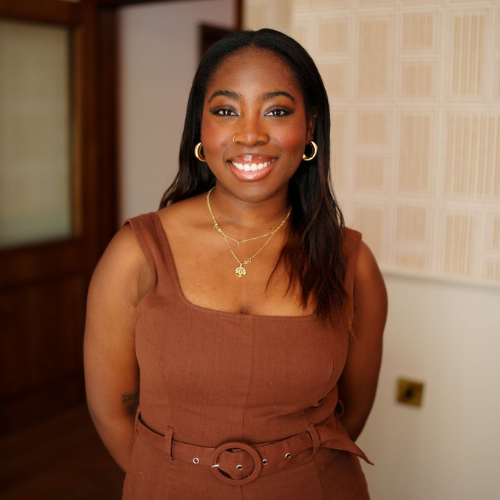
Thara Popoola
Thara Popoola
writer Sex Education, Queenie, Crongton
Twitter: @tharapop
Instagram: @tharapop
Bio: Thara Popoola is a NAACP-nominated screenwriter and Forbes 30 Under 30 honoree working across comedy and drama. A former paralegal and financial investigator, her writing is sharp and character driven. Credits include Sex Education, Queenie, Crongton, Dreaming Whilst Black, Black Ops and Pierre. She also co-founded Black Women in Scripted and has several original projects in development.
How did you get your break in screenwriting?
I grew up writing a lot of poetry and short stories; however, I didn’t venture into screenwriting until much later. I started off writing short films, one of which was screened at London Short Film Festival and shown on TV. When COVID hit, I finally wrote my first TV script, ‘Poems from my brother’, which got me onto ‘4Screenwriting’, a prestigious writers’ programme in the UK, and that opened a lot of doors for me.
What was a major turning point in your career?
A major turning point was in 2021 when I got onto Channel 4’s screenwriting course ‘4Screenwriting’. This really helped skyrocket my career. I was introduced to my agent via the course, and the script I wrote on the course, ‘Comfort vs Harm’, got me lots of meetings and numerous TV writing jobs.
What are you working on now?
I’m currently writing on a TV show and developing several original projects. I’m also a co-founder of Black Woman in Scripted and we’re planning several events for our community.
What are some of the biggest lessons you’ve learned?
Some of the biggest lessons I’ve learned is in relation to rejection. As a screenwriter, we face so much rejection and I’ve found separating my identity and sense of self from my projects has made handling the ‘no’s’ a lot easier as understand it’s not personal. Also, not basing my self-worth on this industry or my achievements as a writer has helped me maintain my peace of mind whilst navigating the high’s and low’s of this industry.
What are some of your favorite films?
Truman Show, Hot Fuzz, Sister act 2, Like Crazy
Who are some of your favorite screenwriters?
Dan Fogelman, Quinta Brunson Alex Garland, Britt Marling
Memorable experience from Austin Film Festival?
A memorable experience from AFF was attending a session with Yvette Lee Bowser. It was incredibly inspiring to hear from a Black Woman who has had such a successful career in the industry. One of the many things I took away from her session is the importance of being bold, especially as a black woman in this industry.
How have you been spending your time since being apart of Austin Film Festival?
After the festival I went straight into a writers room and have been writing on shows and developing my own projects. I also got the chance to connect with a writer I met at AFF who was visiting London, which was really lovely!
How has being part of the AFF community helped spark your storytelling career?
I think it just reminded me of why I do what I do. It’s really easy to get caught up in the politics of the industry and feel burnt out, but being at AFF and surrounded by people who have a shared passion for storytelling and writing was really inspiring and energizing.
What are you looking forward to in 2026?
Looking forward to hopefully a few shows I’ve written on coming out and also hopefully that I’ll get a green light on my own original project. I’d also like to finally write a feature script this year!
Thara Popoola
writer Sex Education, Queenie, Crongton
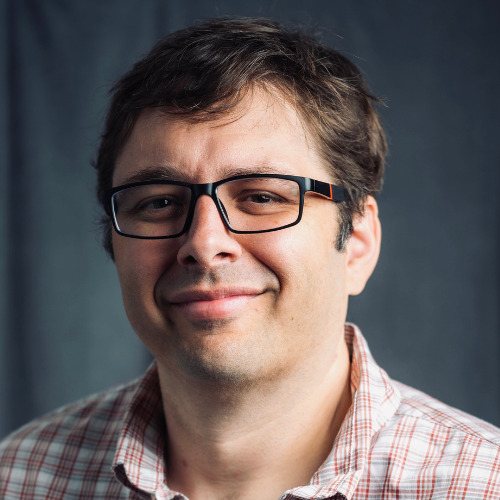
Garrett Ratcliff
Garrett Ratcliff
writer/producer; Contra, Silent Night Deadly Night
Project Selected: Wooden Dice, Short Screenplay, Semifinalist
Year Selected: 2017
Bio: Garrett Ratcliff is a screenwriter and producer who traded a Ph.D. in History from the University of Edinburgh for the human drama that drew him to history in the first place. He wrote the upcoming feature Contra (2026) starring Kal Penn and produced Silent Night Deadly Night (2025).
How did you get your break in screenwriting?
I started with screenplay contests, including AFF, basically as a way to see if I was any good. Having success in contests gave me personal validation, but it also provided me with a sort of industry vetting that really helped me early on.
What was a major turning point in your career?
I had a script that was set to get produced. It was about to get made, contracts signed, everything was great. So I quit my day job… and then it fell through. That really sucked, but it was the best thing to happen to me because I burned the boats and there was no turning back.
What are you working on now?
A contained sci-fi horror script called Bad Jeeves.
What are some of the biggest lessons you’ve learned?
It took me a while to realize that I needed to work with directors and other filmmakers on their projects and not simply write my own spec scripts and hope one broke out. This is such a collaborative medium and, at least for me, that has meant bringing my skills to bear on things I did not conceive.
What’s the hardest scene or project you’ve had to write? How did you navigate?
I was the last screenwriter to come onboard to Contra before it went to camera. I had a very, very short timeframe for the rewrite. With such a short deadline, I didn’t have enough time to worry or overthink it. I had to just go with my instincts and write. Which was a great lesson in general.
What are some of your favorite films?
City of God, Excalibur, Pan’s Labyrinth, Robin Hood (1938), Rob Roy
Who are some of your favorite screenwriters?
Billy Wilder, Linda Woolverton, Alan Sharp, Shane Black, Scott Frank, Greta Gerwig, Tony Gilroy, Eric Roth, Lawrence Kasdan, Robert Towne, William Goldman
Memorable experience from Austin Film Festival?
I once sat at a table in the Driskell Bar for about two hours chatting with a nice guy, seemed to know a lot about screenwriting. Turns out that guy was Shane Black!
How have you been spending your time since being apart of Austin Film Festival?
Writing, writing, writing.
How has being part of the AFF community helped spark your storytelling career?
I live in Austin. I send my kids to the AFF summer camp, I try to attend the opening night charity auction every year, and I go to the festival most years. Not sure where my career would be without AFF, but it definitely wouldn’t have been as much fun.
What are you looking forward to in 2026?
With a little luck, two scripts I helped write (with the directors) should both get made this year. Blunt Force Trauma with Burns Burns and Anna’s Turn with Carl Thiel.
Garrett Ratcliff
writer/producer Contra, Silent Night Deadly Night
Tatti Riberio
Tatti Riberio
director Valentina, founder of franknews
Project Selected: Valentina
Year Selected: 2026
Instagram: @frank.news
Bio: Tatti is a journalist and filmmaker raised in the Bay Area. She is the founder of franknews and a graduate of the USC School of Cinematic Arts. Valentina is her first feature film.
How did you get your break in screenwriting?
I haven’t yet, but this is helping.
What was a major turning point in your career?
Getting a greenlight for my first feature, Valentina – thank you Jack Pearkes.
What are you working on now?
Another hybrid. The news (@frank.news).
What are some of the biggest lessons you’ve learned?
It’s allowed to feel unreal – IT’S A MOVIE!
What’s the hardest scene or project you’ve had to write? How did you navigate?
Writing for me is always hard until it isn’t. Anything can feel hard to write if it’s being forced. A lot of Valentina I can’t take credit for, it’s heavily improvised, but making sure the story felt cinematic even when the point was to capture reality was really about being immersed in the pacing and following what felt exciting.
What are some of your favorite films?
Raising Arizona, Singing In The Rain, Rush Hour 2.
Who are some of your favorite screenwriters?
Michael Arndt, Robert Towne, Joel & Ethan Coen
Memorable experience from Austin Film Festival?
First of all the bats. Also, I love the Q&As after a screening. You sit with a movie for so long before people start seeing it, suffering through a watch is all worth it when a room full of people are enthusiastic about it afterwards.
How have you been spending your time since being apart of Austin Film Festival?
Working! Sharing Valentina!
How has being part of the AFF community helped spark your storytelling career?
Being recognized and included in AFF is so validating. It places you amongst people you admire as peers – which is incredibly valuable.
What are you looking forward to in 2026?
More movies. Seeing them. Making them. Hating them. Loving them!
Any news you’d like to share?
Valentina will likely be at a festival near you soon, come watch! You can see where we’ll be playing at @valentinamovie — otherwise, the motto of my news company is literally no news is new, so no (but yes). We do independent film, news, and radio. (franknews.us , frank.radio, IG at @frank.news))
Tatti Riberio
director Valentina
Ellen Rodnianski & Tanya Leonova
Ellen Rodnianski & Tanya Leonova
Director and writer American Baby
Project Selected: American Baby
Year Selected: 2025
Bio(s):
Ellen Rodnianski is a filmmaker based in New York City and was born in Germany into a Russian-speaking Ukrainian family. She received her BA in History from The University of Chicago, and followed up this extremely academic degree with an MFA from the USC Peter Stark Producing Program.
Her debut narrative feature, American Baby, is currently on the film festival circuit. It had its US premiere at the Austin Film Festival where it also won the Audience award. Her short films have premiered at international festivals including the Warsaw Film Festival and Cottbus Film Festival, and are featured on prestigious online platforms such as Director’s Notes and Omeleto.
Ellen has directed in Russian winters and Texas summers, so temperature…not really a concern anymore. But before she was out there calling shots in extreme weather conditions, Ellen worked behind the scenes: as assistant to Brit Marling on Season 2 of Netflix’s The OA, and as Director’s Assistant to Kantemir Balagov on the HBO pilot of The Last of Us. She is also an associate producer of Balagov’s acclaimed film Beanpole and Kira Kovalenko’s Unclenching the Fists. Both films were awarded at the Cannes Film Festival and are distributed by MUBI.
Tanya was born and currently lives in Moscow, Russia. Her first degree was in journalism and, after a few years in the field, switched to screenwriting. She’s still wondering why she hasn’t done it years before.
How did you get your break in screenwriting?
ELLEN: Going to USC for grad school taught me a lot about what a good script even is, first and foremost by reading lots and lots of scripts.
TANYA: I’ve decided it would be appropriate to compliment an author of a popular blog using words “as a professional screenwriter…”. The author appeared to be a producer of a major movie company in Russia (which I would have known if I troubled myself with reading his blog’s info first) and he asked to read my scripts. I only had two at the moment. Both shorts — because this particular “professional screenwriter” had just started studying drama in University. So I’ve literally sent two first scripts I’ve ever written to a big and famous production company. Which didn’t even film shorts. I wouldn’t actually recommend any beginners to embarrass themselves the way I did, but the guy actually did love what he’s read (ok, just a half) and hired me for one of their projects, so — embarrass away, it may work!
What was a major turning point in your career?
ELLEN: Going to USC for grad school taught me a lot about what a good script even is, first and foremost by reading lots and lots of scripts.
TANYA: Still turning, but I’d say seeing a movie I wrote officially selected to AFF counts as something.
What are you working on now?
ELLEN: Working on several scripts: a TV show with a sports drama element at the center, a grounded sci-fi film script and a documentary.
TANYA: I’m working on a popular comedy series in Russia as a part of a writing team. Also me and my co-writter from Lithuania Anna Chepaitene are working on an independent comedy drama — fingers crossed, soon we’ll finally have a pilot to present.
What are some of the biggest lessons you’ve learned?
ELLEN: As a writer-director the hardest lesson I’ve learned was how to “kill your darlings.” There are scenes that you love but that ultimately don’t serve the story.
TANYA: The ones I am still struggling with are: the script is never finished, you should just stop at some point — better done than perfect. And some stories you should just let go.
What’s the hardest scene or project you’ve had to write? How did you navigate?
ELLEN: There is a very dramatic scene in American Baby that definitely tops this list. The 15-year-old protagonist tries self harm as a way of terminating her pregnancy…
TANYA: Each new project feels like the hardest at some point. American Baby really was a challenge! It’s my first script in English, it was supposed to constantly switch between timelines, and of course — and this was a HUGE concern — it’s the first time I wasn’t writing about the environment I actually live in. I’d say having Ellen as a co-writter made it all doable. I could just switch languages whenever I felt stuck trying to choose the right word; it felt very safe. And Ellen did really good research on the community so, by the time we started working on a draft, the material didn’t feel “foreign” anymore.
What are some of your favorite films?
ELLEN: Interstellar, Pan’s Labyrinth, Catch Me If You Can, Lost in Translation, Fish Tank
TANYA: Big Fish, Bird, Tangerine, Whiplash
Who are some of your favorite screenwriters?
ELLEN: Jonathan Nolan, Craig Mazin, Greta Gerwig, Wachowski Sisters, Brit Marling & Zal Batmanglij, Phoebe Waller Bridge, Martin McDonough
TANYA: Phoebe Waller-Bridge, Andrea Arnold
Memorable experience from Austin Film Festival?
ELLEN: Being to able to screen American Baby with so much of our cast and crew was very special.
TANYA: Didn’t get a chance to be there.
How have you been spending your time since being apart of Austin Film Festival?
ELLEN: Writing, traveling to more festivals, moving to NYC
How has being part of the AFF community helped spark your storytelling career?
ELLEN: I’ve read wonderful scripts by writers I met at the festival, and that is always very exciting!
TANYA: It would definitely have been a huge boost during more normal times, but since 2022 the world has changed and the political climate in Russia, where I still live and work, also has changed dramatically. Therefore this achievement has gone unnoticed here.
What are you looking forward to in 2026?
ELLEN: American Baby continuing to find its audience is very special and exciting to me as the filmmaker!
TANYA: Hope to see some more of my scripts come alive and to finish a story I have high hopes for. I would also love to get a chance to write something in English again.
Any news you’d like to share?
ELLEN/TANYA: Please follow americanbabymovie on instagram for updates on the movie!
Ellen Rodnianski & Tanya Leonova
writer/director American Baby
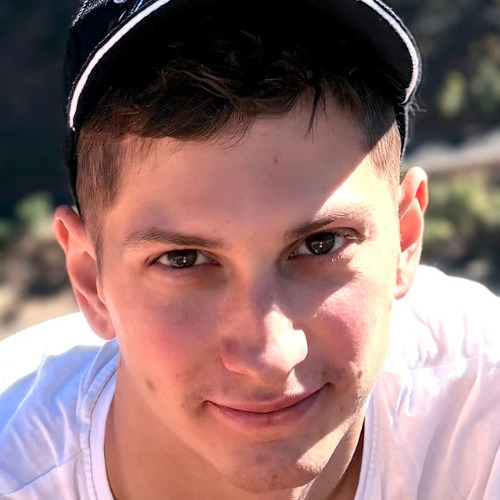
Jan Saczek
Jan Saczek
Writer/director Recess, Dad’s Not Home
Project Selected: Recess
Year Selected: 2025
Instagram: @jan_saczek
Bio: Jan Saczek is a film and television directing student at the Krzysztof Kieślowski Film School in Poland. He is the director and screenwriter of several short films, including Dad’s Not Home (which won a Gold Student Academy Award) and Recess (which was awarded at the Austin Film Festival).
How did you get your break in screenwriting?
I got my break in screenwriting when I wrote a short film script, which I then directed and sold to TV (Canal+).
What was a major turning point in your career?
For me, a major turning point was winning an award at the Student Academy Awards in the Narrative category.
What are you working on now?
I’m developing my first feature script, a dark comedy that blends elements of crime with themes of memory loss.
What are some of the biggest lessons you’ve learned?
I’ve learned to always work with people more talented and smarter than me, and to trust their experience and intuition. For me, that’s the best recipe for making a great film.
What’s the hardest scene or project you’ve had to write? How did you navigate?
The hardest scene I had to write was the final scene of my short film Dad’s Not Home. The ending had to be a victory, yet one where the characters still seem like they’ve lost. The answer turned out to be the one that usually works best – smashing your head against the desk until you find a solution.
What are some of your favorite films?
Die Hard, Once upon a time in America, Falling down, Whiplash
Who are some of your favorite screenwriters?
Vince Gilligan, Lars von Trier, Will Tracy, Chan-wook Park, Joon-ho Bong
Memorable experience from Austin Film Festival?
The screening of Wake Up Dead Man at the Paramount Theatre with 1,200 people. It was one of the best screenings of my life.
How have you been spending your time since being apart of Austin Film Festival?
I’ve been working on my scripts and promoting my short film Dad’s Not Home after it was shortlisted for the Academy Award in the Live Action Short Film category.
How has being part of the AFF community helped spark your storytelling career?
I’ve met many talented filmmakers; some of their films have been a great inspiration to me, and I’m looking forward to working with them in the future.
What are you looking forward to in 2026?
I’m looking forward to finding a producer for my first feature film.
Any news you’d like to share?
My short film Dad’s Not Home will be screening at the Cleveland International Film Festival: https://www.clevelandfilm.org/films/dads-not-home-2026/
Jan Saczek
writer/director; Recess, Dad’s Not Home
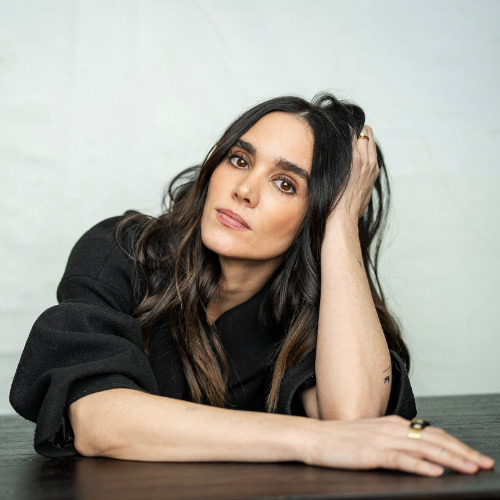
Samantha Smart
Samantha Smart
writer/producer/actor Charliebird
Project Selected: Charliebird
Year Selected: 2026
Bio: Samantha Smart is the writer, producer, and lead actor of Charliebird which won the top prize at the 2025 Tribeca Festival. The festival’s jury awarded the film with the Founders Award for Best U.S. Narrative feature describing it as “a deeply affecting portrait featuring grounded and complex performances” and called it “an assured and well-crafted debut.” Smart also contributed two original songs to the film.
Following sold out screenings at Tribeca and rave reviews, Charliebird screened at festivals such as Mill Valley, Hamptons International, Austin, Denver, SCAD Savannah (awarded Best Feature Film), Coronado (awarded Best Feature Film), Jackson Hole International, and Tribeca Lisbon. It also won the Marcello Petrozziello Award at the Lucca Film Festival in Italy.
Born and raised in League City, Texas (where Charliebird was filmed) Smart splits her time between Texas and France. Smart is currently preparing her next film, from a script she wrote, and will direct and star.”
How did you get your break in screenwriting?
I had this idea in early 2020. I didn’t start writing it until 2021. I had been acting for a little bit, but writing allowed me to explore all parts of my creative brain and now I’m hooked. I think constantly studying great texts from theater helped a lot.
What was a major turning point in your career?
Shifting from an actor for hire to an actor/writer/producer. Creating projects. Getting into Tribeca 2025 and winning Best Feature was also a major pinch-me milestone.
What are you working on now?
I am preparing my directorial debut from a script I’ve written and will also act in. I am collaborating on a television series and another feature with writing partners.
What are some of the biggest lessons you’ve learned?
Honesty in your work is everything. You can be a kind person and still make great art. You can say no to things that don’t resonate with you.
What’s the hardest scene or project you’ve had to write? How did you navigate?
There is a big fight scene in CHARLIEBIRD that was both difficult to write and act. I ended up changing the scene a bit a couple of days before we shot it. It had to come from a dark place, and I think working with Gaby (who played Charlie) really made it pop.
What are some of your favorite films?
Paris, Texas (Wim Wenders); Pina (Wim Wenders); A Cold War (Paweł Pawlikowski); Amour (Michael Haneke); Biutiful (Alejandro González Iñárritu); Une Separation (Asghar Farhadi); Boyhood (Richard Linklater)…
Who are some of your favorite screenwriters?
Kenneth Lonergan, Justine Triet, Emerald Fennel, Phoebe Waller-Bridge, Abi Morgan.
Memorable experience from Austin Film Festival?
The imax theater! It was breathtaking. Meeting all the writers and having our Texas-made movie premiere at such a prestigious Texas festival.
How have you been spending your time since being apart of Austin Film Festival?
I have been on a great festival tour for Charliebird and also just went to the 98th Academy Awards for Jane Austen’s Period Drama. Lots of writing, and meeting great people.
How has being part of the AFF community helped spark your storytelling career?
I made such wonderful connections not only to other screenwriters but to the Texas film community at large. I want to continue to make movies in my home state and Austin Film Festival definitely helped spark lots of momentum for that.
What are you looking forward to in 2026?
Seeing movies in theaters. Writing without A.I. Good music. Working with other women!
Any news you’d like to share?
Well, I’m not sure if this is useful but I was featured in Harper’s Bazaar for attending a Women in Film Oscars events! https://www.harpersbazaar.com/celebrity/latest/g70741725/exclusive-photos-women-in-film-2026-oscar-nominees-celebration/
Samantha Smart
writer/producer/lead actor Charliebird
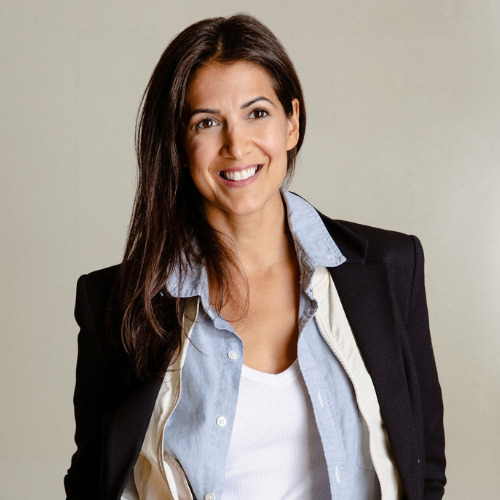
Naya James Sonnad
Naya James Sonnad
Writer Buzz, Rock 49, Tipping Point
Instagram: @nayajames
Bio: Naya James Sonnad is a writer of plays and films, actor and producer in New York City. Credits include the world premiere of 60/40 at the Hudson Guild Theater; Abdication! at Theater for the New City, also produced at Silver Spring Stage in Washington DC; over a dozen original one-acts, and several short films. Naya is a winner of the 2025 WGA East/FilmNation Emerging Screenwriters Fellowship. Her play Tipping Point is a winner of the 2025 Ashland New Plays Festival, a 2024 Austin Film Festival Finalist, and Nominee for the 2024 Susan Smith Blackburn Prize for playwriting.
How did you get your break in screenwriting?
I first started by adapting some of my one-act plays to short films. I found I loved the process of telling a story with the benefit of a close up every once in a while!
What was a major turning point in your career?
2024-2025 I received a lot of recognition, which launched me into a great professional space. It started off with being a Finalist at AFF, then went into production of my play 60/40, right into winning the WGA/FilmNation Emerging Screenwriters Fellowship, and culminated in winning Ashland New Plays Festival for my play Tipping Point.
What are you working on now?
I’m in the process of revising my sci-fi comedy Buzz, which I wrote in the WGA/FilmNation Fellowship. Also on finding a good home for my play Tipping Point, and am in the baby stages of writing a new feature—a female-driven psychological thriller.
What are some of the biggest lessons you’ve learned?
From talking with so many amazing screenwriters, I’ve learned that there is good writing and not so good writing, but there is no one right way to do things. Artists have wildly different processes and approaches, but the results can be equally effective and beautiful. So basically, sit in your chair and get it down however you need to, and don’t overthink the process!
What’s the hardest scene or project you’ve had to write? How did you navigate?
I had a crazy challenge in 2025, which was to adapt my mini series script 60/40 into a stage play. Unconventional! I always envisioned the project as a web series or possibly one-hour pilot, but my production partner (Lu Bellini, a very talented theater director and filmmaker) saw its promise as a stage piece. It became a multi-media play with both live actors and pre-recorded footage that played on a TV for the entire length of the show. The premise of 60/40: If the only way to save humanity is to relocate 40% of Earth’s inhabitant’s to another planet, how do you choose who stays and who goes? To implement sci-fi elements on stage is always a challenge. To pull it off, I leaned heavily on my amazing collaborators—director, filmmakers, animator, set design, and the actors who did beautiful work. It was a real bitch to thread that needle. But it was worth it!
What are some of your favorite films?
I like movies that are genre-bendy, surprising and have a smart way of making social commentary. Some recent examples are Sorry to Bother you, Blink Twice, The Substance, Monkey Man. I also have an affinity for patient, character driven pieces because of my background as a playwright—like Past Lives and Janet Planet. My favorite comedy of all time is probably My Cousin Vinny—just an expertly executed fish out of water story. My favorite action movie is Enter the Dragon. It was such a revelation when I first saw it.
Who are some of your favorite screenwriters?
I’ve always loved Diablo Cody! Clever and biting, but so entertaining at the same time. Meg LeFauve is so talented and also such a gift to the whole screenwriting community. Of course, the Wachowski sisters. Coralie Fargeat. Mary Harron’s storytelling is endlessly inspiring. I’d love to see more women genre writers being produced.
Memorable experience from Austin Film Festival?
I had the best time there, and a couple talks really stood out. I met Eric Anthony Glover at the Warner Brothers Discovery Access seminar. He was so kind and engaging that it made me want to start writing for TV! And I got so much out of the talk with Glen Basner and Jeff Nichols. I loved seeing the relationship between producer and filmmaker be so creative, collaborative and supportive. I think there was some manifesting going on, because after that talk I turned and said to the person I was with and stated: “I must work with FilmNation!” Six months later, and with the gift of a nomination from AFF, I was chosen for their emerging Screenwriters Fellowship
How have you been spending your time since being apart of Austin Film Festival?
Writing movies! I spent a long time as a playwright and actor. AFF ignited a serious passion for writing for the screen. I have so many ideas for new features, I’ve just been trying to get them done! I’ve also been lucky to get in a lot of family time, including a role I take very seriously—fun Auntie to my 4 incredible nieces and nephews.
How has being part of the AFF community helped spark your storytelling career?
Being a part of this community has made my world smaller in the best possible way. Case in point, a fellow screenwriter friend (Emily Everhard) who was part of my cohort of the WGA/FilmNation fellowship was on this list last year! AFF celebrates writers, which is why I love it so much. Writers are not only the smartest people I know, but also some of the most generous and supportive. To meet more of them and strengthen my presence in this world has benefited me not only as a writer, but as a human being.
What are you looking forward to in 2026?
Well, not world peace. I digress…with the incriminating political landscape, I sense a push for female-driven narratives, notably made by women filmmakers. I have to keep the hope and faith alive, so I’m looking forward to more of that. I’ve also met so many fantastic creative people through the opportunities and fellowships I’ve been a part of the past couple years. I look forward to collaborating with and continuing to learn from them!
Any news you’d like to share?
Some! I’m a finalist for the Stowe Story Lab AFF Fellowship. https://stowestorylabs.org/news/stowe-story-labs-announces-lab-finalists-fellowships-2026 Plus a couple things in the works that I’m not allowed to announce yet, as these things go ; )
Naya James Sonnad
writer, Buzz, Rock 49, Tipping Point
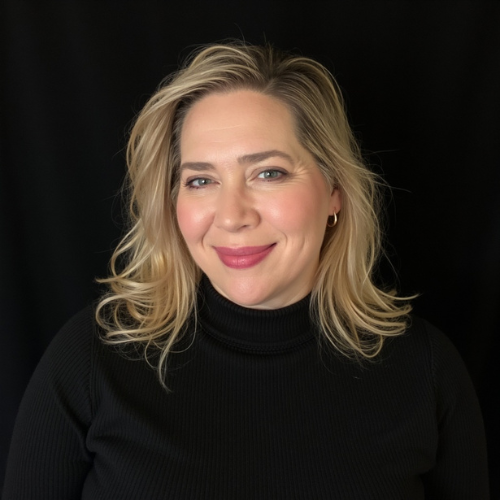
Melanie Toast
Melanie Toast
writer Shut In, Cliffhanger, The Rancher
Project Selected: Shut In, Cliffhanger, The Rancher
Year Selected: 2026
Bio: Melanie Toast is a screenwriter whose debut spec Shut In sold to New Line Cinema in a competitive bidding war. She has since developed projects with Universal, Paramount, Miramax, and Netflix, most recently selling her thriller spec The Rancher, to be directed by Ramin Bahrani. Known for emotionally intimate, character-driven thrillers that place complex women at the center of high-stakes worlds, Toast wrote the screenplay for Cliffhanger, directed by Jaume Collet-Serra and starring Lily James and Pierce Brosnan, slated for a summer 2026 theatrical release.
How did you get your break in screenwriting?
It actually started at the Austin Film Festival! I attended a panel on contained thrillers and horror when an idea hit me. I wrote Shut In over the next year, put it on The Black List website for feedback, and within a month it was optioned. Things moved quickly after that.
What was a major turning point in your career?
Writing through production on Cliffhanger was a real turning point in that I saw my work fully collide with the realities of filmmaking — performance, blocking, location, and budget constraints. Watching actors interpret the lines, and having to adjust in real time, made me a much more precise and flexible writer.
What are you working on now?
I’m currently writing a supernatural domestic thriller at Universal, and I’m also writing an original spec in the psychological horror space. I’m always and forever drawn to stories that place complex women under pressure and see how they adapt and survive.
What are some of the biggest lessons you’ve learned?
I’ve learned how to take notes and not die—that my work isn’t me, it’s something I do. That shift alone makes everything easier. I’ve also learned it’s usually about finding the right people, not the right project. The right project with the wrong people can be hell, but the right collaborators—people who value your voice and share your vision—can elevate anything.
What’s the hardest scene or project you’ve had to write? How did you navigate?
The scenes that are hardest to write are also the ones I love most when they work. They’re the quiet, emotional moments—where you can’t hide behind action or spectacle. Cracking those can feel like rocket science (not that I would know), but incredibly rewarding when you finally get it right. But getting it right can be frustratingly slow. I just keep going. Keep rewriting. Dream about it. Take long walks and showers. Give myself the solitude to let ideas flow. Sometimes it comes down to a single line of dialogue landing at exactly the right moment—one you may have rewritten 500 times over three weeks before it finally clicks. But when it does — ecstasy!
What are some of your favorite films?
It’s a Wonderful Life, A Room With a View, E.T., True Grit, The Others, The Princess Bride
Who are some of your favorite screenwriters?
William Goldman, The Coen Brothers, Scott Frank, Alex Garland, Lynne Ramsay, Jennifer Kent, Guillermo del Toro
Memorable experience from Austin Film Festival?
I was invited to speak on a few panels this past year, which felt like a true full-circle moment—especially given how integral Austin Film Festival was in launching my career.
How have you been spending your time since being apart of Austin Film Festival?
Since being part of Austin Film Festival, I’ve been deep in the work — developing projects at the studio level, working on original specs, pitching. I feel really fortunate to always have a project at hand.
How has being part of the AFF community helped spark your storytelling career?
Austin Film Festival made the industry feel accessible to me, coming from a small Texas town and knowing no one in the business. Being in rooms with working writers, hearing honest conversations about the craft and the business—and later getting to be part of those panels myself—it’s been an invaluable resource in shaping my career.
What are you looking forward to in 2026?
I’m looking forward to seeing Cliffhanger come out into the world and continuing to build on that momentum—developing new projects, writing original material, and pushing further into the kind of stories I’m most drawn to telling. It’s a great business for someone who thrives on novelty—there’s always something new to learn.
Melanie Toast
writer SHUT IN, CLIFFHANGER, THE RANCHER
Lindsey Villarreal
Lindsey Villarreal
writer Woman Hollering, Vida, Tales of the Walking Dead, La Máquina
Project Selected: Dying in the South
Year Selected: 2018
Bio: Lindsey Villarreal is a television writer and independent feature writer-director. Her TV credits include La Máquina (Hulu), Mayfair Witches and Tales of the Walking Dead (AMC), George & Tammy (Showtime), Resident Evil (Netflix), Vida (Starz), and The Purge (USA).
She was named one of The Gotham’s 2025 Series Creators to Watch, and her feature screenplay Woman Hollering was selected for The Gotham Market’s 2025 U.S. Features in Development. Lindsey is a 2024 Sundance Screenwriters Intensive Fellow and recipient of the 2024 Sundance Horror Fellowship. She also participated in the 2025 Directors Incubator, sponsored by NALIP and Netflix, and is a graduate of the WGA’s 2025 Showrunner Training Program.
Lindsey currently has original pilots in development with Onyx Collective, 20th Television, and Littlefield Co. and has sold pilots to FX and Amazon.”
How did you get your break in screenwriting?
I was an assistant for eight years for various showrunners and TV writers. One of my first assistant jobs was on the show Mad Men. I was an assistant to the Producers, but it was where I discovered I wanted to write instead.
What was a major turning point in your career?
Getting to pitch a major movie IP over the phone to a bunch of producers in Europe and subsequently not getting that job but then getting staffed on a TV show from it instead. It showed me there are lots of different ways to move forward.
What are you working on now?
I have a book adaptation I’m writing into a horror feature with a great director and actress. I’ve been trying to get financing on another feature that I started writing in 2016! And I sold three pilots in 2024/2025 two of which are still alive.
What are some of the biggest lessons you’ve learned?
That there is no finish line to a career in film. It’s a life. Getting to do the work is winning.
What’s the hardest scene or project you’ve had to write? How did you navigate?
I just wrote and directed a short about taking care of my father who has addiction and then I cast an actor to make him look like my father. It was intense to say the least for me, but I kept trying to remember being vulnerable is what makes good art.
What are some of your favorite films?
Let me look at my letterboxed. Right now, it’s more contemporary stuff: Raw, Melancholia, La Región Salvaje and Monos. I love the work of Celine Sciamma. My actual favorites are the 90s movies on basic cable I’d watch with my mom. Stepmom, My girl etc.
Who are some of your favorite screenwriters?
I love all of my screenwriting friends at the Austin Film Society. All of the creators coming through the programs there are spectacular.
Memorable experience from Austin Film Festival?
From wishing I had the guts to apply to the Austin Film Festival when I was at UT in the early 2000s to having a script in competition in 2018 to visiting in 2025 as a mentor and panelist. AFF has been pivotal for me.
How have you been spending your time since being apart of Austin Film Festival?
Writing and discovering I wanted to direct.
How has being part of the AFF community helped spark your storytelling career?
I’m from San Antonio and I want to undergrad in Austin. AFF feels like my hometown festival. It feels like coming home to reflect on how far I’ve come. I’ll always see it that way.
What are you looking forward to in 2026?
Continuing to get my first feature off the ground.
Any news you’d like to share?
I was a Gotham Series to Watch creator in 2025 and was also nominated for the Directors Incubator sponsored by NALIP and Netflix. https://about.netflix.com/en/news/nalip-unveils-fifth-cohort-of-director-incubator
Lindsey Villarreal
writer Woman Hollering, Vida, Tales of the Walking Dead, La Máquina
Warren Wagner
Warren Wagner
writer FOWL, co-writer Hell Followed With Us
Project Selected: The Only Safe Place Left is the Dark
Year Selected: 2021
Twitter: @mrwarrenwagner
Instagram: @mrwarrenwagner
Bio: Warren Wagner is a queer American screenwriter and author living in Canada. In 2023, he published his debut horror novella THE ONLY SAFE PLACE LEFT IS THE DARK with Ghoulish Books. Wagner co-wrote the feature adaptation of the bestselling YA horror novel HELL FOLLOWED WITH US by Andrew Joseph White with screenwriter Alvaro Rodriguez. The film is being produced by Lilly Wachowski’s Anarchists United, Trustbridge Entertainment, and Powerhouse Animation Studios. His work draws heavily from personal history and lived experience, often centering queer characters within bold genre storytelling. In September 2025, Wagner was named to the Blumhouse Screamwriting Fellowship cohort for underrepresented voices in horror.”
How did you get your break in screenwriting?
I wrote my first full-length feature when I was 12 years old, and it quickly became an obsession. I was proud of hitting that milestone so young, but I could also compare it to real scripts and see how far I had to go. That realization pushed me to spend most of my teen years reading scripts, watching films obsessively, and trying to understand how storytelling actually worked. I’m not sure anyone ever truly masters the craft, but after writing features for nearly three decades, I feel like I’ve finally found my voice within the chaos.
What was a major turning point in your career?
I’d hate to say placing as a finalist in the Austin Film Festival because that seems like the answer I’m expected to give, but it really was a turning point. After finding out I was a finalist, I knew I had to attend the conference. When I arrived, I didn’t know anyone and was incredibly nervous at first, but over the course of the festival, I started gaining confidence as people saw the word FINALIST on my badge and stopped to congratulate me. By the end of the trip, I had met Alvaro Rodriguez, who was a judge in my category, and while I didn’t win, he had voted for me and was the first industry writer to tell me I had a real voice. I left Austin no longer seeing screenwriting as just a personal obsession, but as a career I wasn’t going to give up on. If I didn’t place in the festival, and if I didn’t attend the conference, I would’ve never met Alvaro and we would’ve never worked on a project being produced by Lilly Wachowski that got me into the WGA.
What are you working on now?
I have several projects on the go and am trying to strike a balance between different genres to avoid feeling creatively stagnant. I’ve been making a much bigger effort to build relationships across the industry at every level since film is such a collaborative medium and screenwriters cannot just sit in a dark room writing our little stories alone. I’ve also been focused on finding a manager who feels like the right long-term fit for me. On top of all that, I’m gearing up to direct for the first time in a while. It’s a half-hour proof-of-concept comedy pilot I co-wrote with my friend Courtney Ross, titled LESS UNHAPPY. The project is about a gay man and a lesbian who are kicked out of the queer community for their toxicity. They decide to try living as a straight couple, theorizing that straight people are dumb and therefore less miserable than smarter gay people. Directing is something I’m interested in exploring more in the future, so it felt like a good time to push myself outside my comfort zone.
What are some of the biggest lessons you’ve learned?
Don’t let yourself get too comfortable! For the first 20 years, I wrote almost exclusively comedy features, and eventually every script started to feel like a “Warren” script in the worst way. I wasn’t taking risks or pushing myself creatively. When I finally tried writing horror, something clicked. It forced me out of my habits, and people started responding to the work in a completely different way. Since then, I’ve tried to approach every script as a “fuck it” script. It’s not worth doing if it doesn’t scare me even a little or feel like a genuine swing.
What’s the hardest scene or project you’ve had to write? How did you navigate?
Co-writing the adaptation of Andrew Joseph White’s wonderful novel HELL FOLLOWED WITH US with Alvaro Rodriguez was easily the biggest challenge I’ve taken on so far. I had never adapted someone else’s work before, and I was suddenly collaborating with a much more established writer whose work I’d admired for years. Along with the normal challenges of adaptation and co-writing, I had to learn to trust my instincts and advocate for the ideas I believed in. Thankfully, Alvaro made that process much easier than it could have been and always treated my voice as valid. The real hurdle was learning to quiet the inner critic and allow myself to speak up when I felt it necessary.
What are some of your favorite films?
John Cassavetes is the all-time great for me, even if that influence might not always be obvious in my work. Other films I’d include are WHO’S AFRAID OF VIRGINIA WOOLF?, THE ROYAL TENENBAUMS, MAGNOLIA, ABOUT SCHMIDT, anything by Charlie Kaufman or the Duplass brothers, and probably DICKS: THE MUSICAL.
Who are some of your favorite screenwriters?
Did I mention my dog’s name was Kaufman? I’m sure he’d LOVE that. Larry Kramer is also someone who really inspired me, and I would not be the writer I am today, for better or worse, if I had not discovered his work. I also really dig anything Mike Flanagan has written.
Memorable experience from Austin Film Festival?
I’d been attending the conference every year for the previous five years, and in 2025 I was invited to be a panelist. Having gone to so many panels over the years, I was always impressed by the speakers and never imagined I would sit up there myself talking about my writing. Public speaking is something I’ve always shied away from. But whenever I attended the festival, I seemed to go into “AFF mode” and become a bit of a temporary social butterfly. Somehow I wasn’t nervous at all and felt completely comfortable sharing my experiences with others. I also got to take part in a panel about LGBTQ+ storytelling, which was apparently the first queer-themed panel in the festival’s history. I was on the panel with my friend Alvaro Rodriguez and the amazing Tracie Laymon, whose film BOB TREVINO LIKES IT was one of my favorites of the year. It was a surreal moment, and something I’m extremely proud to have taken part in.
How have you been spending your time since being apart of Austin Film Festival?
In December, I made my first trip to Los Angeles thanks to the Blumhouse Screamwriting Fellowship and had the chance to meet so many amazing and supportive people. It was surreal finally being in rooms with other writers and filmmakers whose work I admire, and it really confirmed for me that this is what I’m meant to be doing.
What are you looking forward to in 2026?
I just want to see some of my shit get made, you know? Things take a long time to get off the ground in this industry, and I feel like I have a lot of irons in the fire, so I’m hoping to see some movement on a few of them. I’m also excited to be submitting my comedy pilot to festivals and shopping it around. It will be nice to finally have something to show people that isn’t just a script.
Any news you’d like to share?
Recently, I wrote the most fuck-it of all fuck-it scripts titled FOWL. It’s about a closeted Midwestern chicken farmer who’s kidnapped by animal rights activists and injected with a serum that slowly transforms him into a human-chicken hybrid. It’s a genre-bending mix of intense body horror, pitch-black comedy, social and ethical commentary, and what I hope is a genuinely touching gay romance. The wonderful folks at Fairvale Entertainment are attached to produce, and I feel great having the script in the hands of a team whose enthusiasm for the project is so infectious.
Warren Wagner
writer Fowl, co-writer Hell Followed With Us
Anna Zabel
Anna Zabel
writer Courier Girl, Baby Doctor, Everybody Loves a Dead Girl
Project selected: Courier Girl
Year Selected: 2025
Instagram: @_annazabel_
Bio: Anna (she/her) is a writer based in Brooklyn, NY. She is currently the writer’s assistant on Bash Doran’s series Fear Not, starring Anne Hathaway. She also works for Bash’s company, Pete’s Uncle, where she contributes to projects across various stages of development and production. Prior to Fear Not, she was the showrunner’s assistant on the Hulu pilot Foster Dade.
Outside of her work with Bash, she recently wrote and executive produced her first short film, directed by Sara Crow and featuring Succession’s Peter Friedman. And she’s cooking up lots of other projects!
How did you get your break in screenwriting?
I’m not sure if this is exactly how I got my break, but it’s where I began learning the craft of screenwriting — through a TV writing class with Alan Kingsberg. After taking the class, loving it, and still feeling hungry for more, I applied and eventually received my MFA in TV Writing from the Killer Films and Stony Brook program that Alan leads. That’s where I continued to develop my skills and met another incredible mentor and teacher, Sydney Sidner.
What was a major turning point in your career?
The major turning point in my still very new career was meeting Bash Doran. Instead of interviewing me, she invited me to her office to help out on a pitch she and her fantastic producer, Mallory Baysek, were working on. It was so much fun, and we clicked super quickly. I didn’t start working for her full-time right away, but I stayed in touch and took every opportunity to learn from her—soaking up her wisdom, humor, and kindness whenever I could. She’s the BEST.
What are you working on now?
Aside from my work with Bash, I’m currently developing a new pilot, a feature with my friend and collaborator Raina Seyd, and a new short. The pilot, Everybody Loves a Dead Girl, has a tasty logline: When her identical twin’s mysterious death is ruled a suicide, Joan isn’t convinced—so she transfers to her sister Sloan’s elite college to investigate the crime, only to discover how little she really knew her beloved sister. Our feature, Another High School Movie also has a tasty logline: Teen stars Peaches Mills and Levi Gossimer have never been to actual school. But when they’re cast as the romantic leads in a French auteur’s buzzy new drama – meant to expose the underbelly of American teenagehood today — they’re forced to enroll as students in an average American high school to prepare for their roles.
What are some of the biggest lessons you’ve learned?
I’ve learned not to discount a note on my work just because I don’t like it at first. For me, it’s better to sit with it for a few days, process it, and then respond. I often find that my initial reaction isn’t where I ultimately land. It can be hard to receive feedback on deeply personal work, so giving myself time and space allows me to better absorb the note and, if it feels right, address it. I’ve also learned that stepping away from a project for a few weeks and then returning to it is almost always helpful. With some distance, I can see more clearly—what needs to be sharper, funnier, tighter, or cut altogether. It’s hard to regain perspective without that space.
What’s the hardest scene or project you’ve had to write? How did you navigate?
I’ve had to write a lot of scenes that are outside my realm of knowledge—medical scenes, scenes that rely on an understanding of physics, and scenes involving complex legal jargon—and they’re super hard for me! For that kind of writing—and this may be obvious—research is key: Google is helpful, but it’s even better to speak directly with an expert. So I’ll call up anyone I think might be able to provide some insight. I also think it’s important to remember that, even in these types of scenes, the fundamentals of writing still apply. A scene should end in a different place than it began, characters need clear wants, and the relationships still drive the scene.
What are some of your favorite films?
Little Miss Sunshine, Do the Right Thing, The Florida Project, Shoplifters, Juno, M, When Harry Met Sally, Dog Day Afternoon… to name a few.
Who are some of your favorite screenwriters?
Tony McNamara, Elizabeth Meriwether, Michaela Coel, Armando Iannucci, Marti Noxon, Shonda Rhimes, Mel Brooks, Bash Doran, and so many others!
Memorable experience from Austin Film Festival?
Just after the award luncheon, my friend Michelle Goldman and I went out to grab a taco and gossip about the day. Standing behind us was Andrew Bergamo from the Donners’ Company. We struck up a conversation and ended up spending the rest of the day together, bopping from event to event. AFF is truly the perfect place to make new friends!
How have you been spending your time since being a part of Austin Film Festival?
Hmmm. The way I always do…working, writing, hanging out with friends, watching TV, and cooking. But I’d say the big difference since Austin is that I’ve made a few new friends and had some wonderful meetings with managers who are interested in my work.
How has being part of the AFF community helped spark your storytelling career?
In a few different ways! I’m now part of a writers group made up of Austin community members who have given me wonderful notes on my work and shared their own fantastic stories. Also, to be honest, attending the festival and winning the award has opened doors for me. I made connections there that have lasted, and when meeting new industry people, I think the award sometimes helps spark their interest in my writing and makes them more likely to read my work. But most importantly, I’ve been so inspired by how talented and prolific the Austin writers are. It’s a really awesome group.
What are you looking forward to in 2026?
I’m looking forward to Bash’s show Fear Not going into production, directing my first short, meeting my friend’s baby when she’s born, watching the new season of Euphoria, traveling far from home (going to LA), and doing a lot of writing.
Anna Zabel
writer Courier Girl, Baby Doctor, Everybody Loves a Dead Girl