

Writers can be especially self-aware and hard on themselves, which is ironic because they must let go of that to allow free-flowing ideas. Of course this is easier said than done. Our great AFF panelists from past years put it best on how to get inspired and started on a new idea.
1. Observe, Absorb, Express
“You know, we make it up-I make it up, we make this shit up but very often you know this wasn’t my excuse but there was a New Yorker article on a homeless girl that was bought into the room and one of the writer’s was really struck with her story and sort of modeled a story on that experience and of course it was a totally different thing but she had been very inspired by that article. I love walking through a crowd and hearing snippets of conversations and having something strike me and just grab that snippet and take it out and expand on it and imagine what the context was and create a story around it-sometimes I’ll start a story around a line I’ll be inspired by what I’m listening to or whoever is sitting next to me in a restaurant or whatever it is but there’s nothing I can say like this is how it works or this is where these stories come from. They emerge.” – Jenji Kohan, 2013 AFF Panelist (writer/creator/ep Orange is The New Black, WEEDS; writer/producer Gilmore Girls, Mad About You)
 2. How Do I Know What I Think Until I See What I Say?
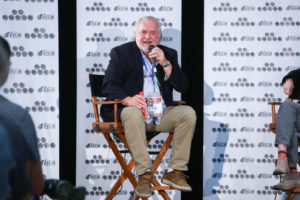
“I think as screenwriters we cut ourselves off too soon from the possibility of what that quote means. What I think he’s saying is, that there is a whole bubbling going on underneath our conscience surface. But we don’t pay attention to it. If you can turn yourself loose, find a way to turn yourself loose when you start writing, when you start thinking about what you want to write. Paying attention to your heart, not paying attention to what is going to sell, what Robert Redford might want to do, Clint Eastwood, or Kevin Costner. Or whoever is the 800-pound gorilla at the moment. You have a better chance of realizing something of real meaning to you as a person, as a writer.” – Bill Wittliff, writer/producer Lonesome Dove, Raggedy Man, Country; writer The Black Stallion, The Perfect Storm
Heart of the Matter with Bill Wittliff (1996)
3. Puzzle-Piecing the Script Together
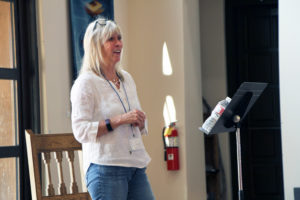
“I think that we don’t really choose our themes in a way. I think Horton Foote put it best that he said, ‘We no more choose our themes than we choose the color of our eyes.’ It’s important to me the stories are all inside me. And yes, I have to figure out a way to get them out and craft them, and I have to add to them, and I have to embellish them, and I have to tell a lot of lies, but you know the heart of the matter is the truth is inside you. I truly believe that stories choose you and you don’t really choose them. As long as you know where you are starting and you know who you are starting with, and you know the place and have an event and you kind of know where you want to go with it, then for me, I get on the wave and I ride it. I find that you discover so much more that way. You just let the story find you as much as you find it.” – Anne Rapp, AFF Panelist and Member (director Horton Foote: The Road to Home; writer Dr. T and the Women, Cookie’s Fortune)
4. Write What You Know
“I never assumed anything other than it was a good show that would succeed. I had this feeling that people would embrace it ‘cause I knew where it came from, and I knew the stories we were telling, ‘cause I grew up in Dallas, so I knew. In a way, people- some people say KING OF THE HILL is a documentary, and I- like, I kind of support that point of view.” – Jim Dauterive, 2018 AFF Panelist (executive producer and co-developer Bob’s Burgers; writer King of the Hill)
5. Looking at a Very Old Idea in a New Way: Re-inventing the ‘Obsolete’
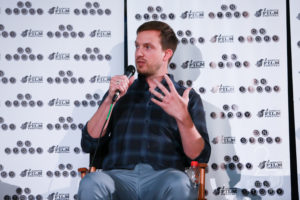
“There was a non-verbal communication course, was all about how we’re communicating constantly, when we’re not saying a single word, and simultaneously, we were in a world cinema course where you’re introduced to the films of Jacques Tati, this incredible French filmmaker who did films like PLAY TIME and MON ONCLE, which were essentially silent films to a certain degree, but in the post-sound film, where all of the gags were communicated by physical movements through sound design and we started thinking, like, “Why aren’t there more silent films in that same regard these days?” And we started thinking, like, “What would a modern-day silent film look like?” And slowly but surely, like, that’s how QUIET PLACE started coming together.” – Scott Beck, AFF 2018 Panelist (writer A Quiet Place, writer/director 65, Haunt)
Our 2022 Script and Film Competitions are now open for submissions!
Click here to learn more about our competitions and submit your story.

Visit onstory.tv for a closer look inside the creative process from today’s leading writers and filmmakers.